EN
 SP
 FR

- Home
- About Us
- Products
- Service
- Project
- News
- Contact Us
Pulished on Nov. 09, 2026
Choosing the right mesh size is one of the most important decisions when purchasing welded wire fence. The opening between wires affects what the fence can contain, how visible it is, how much material is used, and how well it suits a particular application.
However, there is no single mesh size that works best for every project.
A welded wire fence used for a garden may need smaller openings to keep pets or small animals inside. A fence for industrial facilities may prioritize visibility, rigidity, and perimeter protection. Agricultural fencing may require a different combination of mesh openings and wire diameters depending on the livestock being contained.
For distributors, contractors, and project buyers, the best approach is to select mesh size according to the actual function of the fence rather than choosing a specification based on price alone.
This guide explains common welded wire fence mesh sizes, their applications, the relationship between mesh opening and wire diameter, and how to select the right specification for your project.
1. What Does Mesh Size Mean in Welded Wire Fence?
Mesh size refers to the opening between adjacent wires in a welded wire fence panel or roll.
Welded wire fence is manufactured by arranging horizontal and vertical wires into a grid and joining their intersections through resistance welding.
The resulting openings may be square or rectangular.
For example:
25 × 25 mm mesh
50 × 50 mm mesh
50 × 100 mm mesh
75 × 75 mm mesh
100 × 100 mm mesh
50 × 150 mm mesh
These dimensions describe the spacing between wires in the two directions.
Buyers should confirm whether a supplier specifies mesh size as the center-to-center wire spacing or the clear opening between the inside edges of adjacent wires.
This distinction matters.
If a mesh has a nominal center-to-center spacing of 50 mm and the wire diameter is 4 mm, the clear opening will be approximately 46 mm, assuming the stated spacing applies in that direction.
When comparing suppliers, always confirm the measurement convention to avoid ordering a product with smaller or larger openings than expected.
2. Common Welded Wire Fence Mesh Sizes and Their Applications
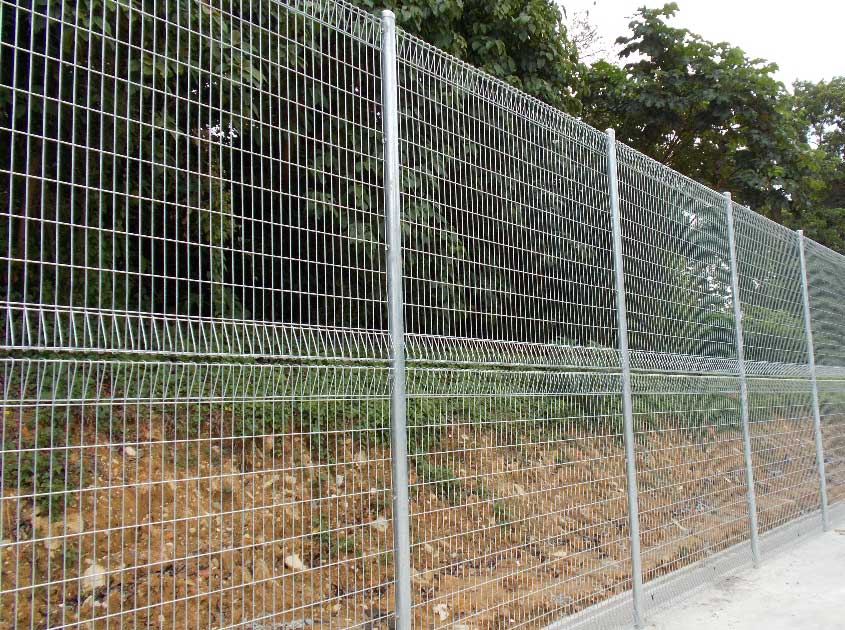
Different mesh openings are suitable for different purposes. The following table provides a practical overview of common configurations. These are illustrative specifications, not universal standards.
Nominal mesh opening
Typical applications
Main consideration
12.5 × 12.5 mm Fine protective screening, selected small-animal enclosures Small openings and higher wire density
25 × 25 mm Small-animal enclosures, garden protection Better containment of smaller objects
25 × 50 mm Pet enclosures, selected agricultural partitions Rectangular opening configuration
50 × 50 mm Garden fencing, general animal enclosures Balance between visibility and containment
50 × 100 mm Residential and agricultural fencing More open appearance
50 × 150 mm Selected livestock and perimeter fencing Larger vertical openings
75 × 75 mm General-purpose fencing and industrial partitions Moderate visibility and open area
100 × 100 mm Industrial enclosures and general boundary fencing Larger openings and good visibility
100 × 200 mm Selected large-area fencing applications More open construction
The correct size depends on the animals, objects, security requirements, wire thickness, and overall fence design.
A larger mesh opening is not automatically unsuitable, and a smaller opening is not automatically stronger. The intended function should determine the specification.
3. How to Choose Welded Wire Fence Mesh Size for Different Applications
3.1 Garden and Residential Fencing
Garden and residential fences may need to keep pets inside, discourage small animals from entering, or create a visible boundary around a property.
For these applications, buyers often consider mesh openings such as:
25 × 25 mm
50 × 50 mm
50 × 100 mm
Smaller openings may be useful where smaller pets or animals need to be contained. Larger openings may be suitable for general garden boundaries where visibility and appearance are more important.
Other considerations include:
Fence height
Wire diameter
Panel rigidity
Bottom clearance
Gate opening dimensions
Post spacing
For small pets, mesh opening alone is not enough. The fence must also be high enough, securely installed, and designed to prevent animals from squeezing underneath or climbing over it.
3.2 Poultry and Small Animal Enclosures
Poultry enclosures require careful consideration of mesh opening because chickens, chicks, rabbits, and other small animals have different containment requirements.
Smaller openings can help prevent smaller animals from passing through the fence.
However, ordinary welded wire mesh is not automatically predator-proof. If protection against rodents, foxes, or other predators is required, buyers may need stronger mesh, reinforced lower sections, buried perimeter protection, and secure overhead coverage.
When selecting mesh for poultry or small-animal enclosures, consider:
The size of the animals
Whether young animals are present
The possibility of predator access
Wire diameter and rigidity
Bottom-edge protection
Environmental exposure
The most suitable mesh size should be determined by the smallest animal that must be contained and the level of protection required.
3.3 Livestock and Farm Fencing
Farm fencing must accommodate animal size, behavior, and pressure against the fence.
Different livestock require different fencing designs.
For example, cattle fencing may use larger openings in certain configurations, while fencing for smaller livestock may require closer wire spacing.
Common considerations include:
Animal body size
Head and leg entrapment risks
Fence height
Wire diameter
Horizontal wire spacing
Vertical wire spacing
Post strength and installation depth
A rectangular mesh configuration may be useful where vertical and horizontal opening dimensions need to be different.
For livestock projects, buyers should also consider whether welded wire fencing is appropriate for the animals involved. Some applications may require purpose-designed woven farm fencing or high-tensile fencing instead.
3.4 Industrial and Warehouse Fencing
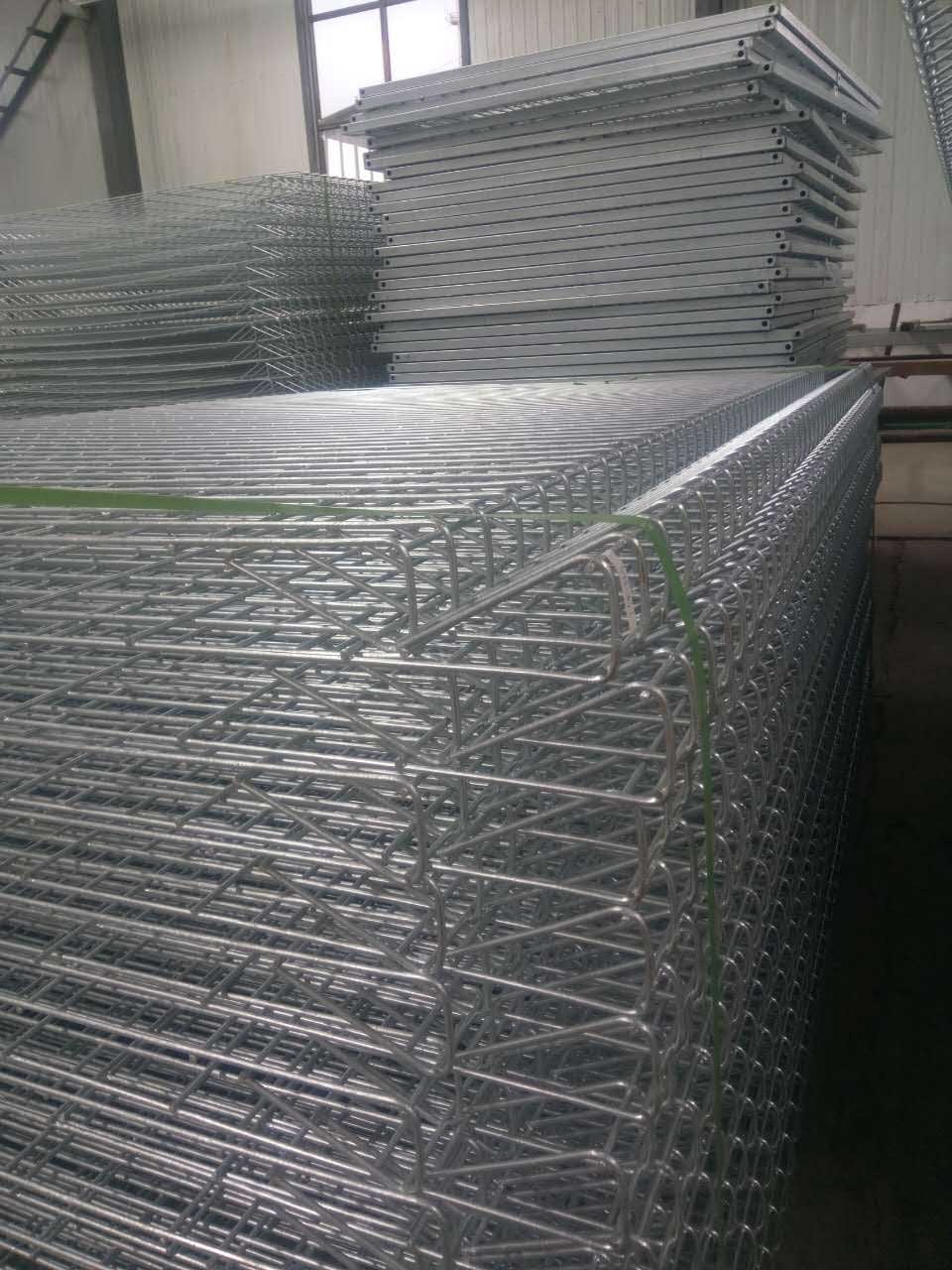
Industrial facilities and warehouses commonly use welded wire fence panels to separate production areas, protect equipment, and create secure storage enclosures.
Mesh openings such as 50 × 50 mm, 50 × 100 mm, 75 × 75 mm, or 100 × 100 mm may be considered depending on the project.
Smaller openings may be useful for containing smaller components or restricting access through the fence. Larger openings may provide better visibility and airflow.
For industrial applications, mesh size should be evaluated together with:
Wire diameter
Panel dimensions
Frame construction
Fixing method
Required security level
Applicable machinery or workplace safety requirements
A welded wire panel alone does not automatically meet machine guarding or workplace safety requirements. The complete enclosure must be designed for the actual risk and relevant regulations.
3.5 Commercial and Perimeter Security Fencing
Commercial and perimeter fencing may use larger or smaller mesh openings depending on the required balance between visibility, physical separation, and resistance to intrusion.
For example, a general boundary fence may use relatively open mesh, while a higher-security installation may require smaller openings, thicker wire, reinforced posts, and specialized panel designs.
It is important to understand that mesh opening is only one part of fence security.
The following factors also matter:
Wire diameter
Weld quality
Panel height
Post spacing
Fixing and connection design
Foundation strength
Anti-climb features
Gate and access-control design
For high-security facilities, specialized anti-climb fencing may be more appropriate than ordinary welded wire fence.
4. Mesh Opening vs. Wire Diameter: Why Both Specifications Matter
One of the most common mistakes in welded wire fence purchasing is focusing only on mesh opening.
Two products may have the same mesh size but perform differently because their wire diameters are different.
Consider the following illustrative comparison:
Specification
Product A
Product B
Mesh opening 50 × 50 mm 50 × 50 mm
Wire diameter 3.0 mm 5.0 mm
Mesh configuration Square Square
General characteristics Lighter construction Heavier construction
Both products have the same nominal opening, but Product B uses thicker wire and will generally have greater rigidity and a higher material weight, assuming comparable steel and manufacturing quality.
The correct option depends on the intended application, panel dimensions, support spacing, and expected loads.
A smaller mesh opening does not necessarily mean a stronger fence. Similarly, a thicker wire does not automatically make a fence suitable for every security or structural application.
Buyers should evaluate mesh opening and wire diameter as a combined specification.
5. Square Mesh vs. Rectangular Mesh: Which Should You Choose?
Welded wire fence is available with both square and rectangular openings.
Square Mesh
Square mesh has approximately equal horizontal and vertical opening dimensions.
Examples include:
25 × 25 mm
50 × 50 mm
75 × 75 mm
100 × 100 mm
Square mesh is commonly selected for general-purpose fencing, partitions, and applications where consistent openings in both directions are required.
Rectangular Mesh
Rectangular mesh has different horizontal and vertical opening dimensions.
Examples include:
25 × 50 mm
50 × 100 mm
50 × 150 mm
100 × 200 mm
Rectangular mesh can be useful when the project requires different containment, visibility, or material-distribution characteristics in the two directions.
The best choice depends on how the fence will be used and how the wires are arranged within the final panel or roll.
6. Does Smaller Mesh Size Mean Higher Welded Wire Fence Cost?
In many cases, yes, but the relationship is not absolute.
A smaller mesh opening generally requires more wire intersections and often more wire per square meter when other specifications are comparable.
This can increase:
Steel consumption
Welding operations
Product weight
Production time
Transportation weight
Wire diameter also has a major effect on the final cost.
For this reason, a small-opening fence made with thin wire may not cost more than a large-opening fence made with much thicker wire.
To compare quotations fairly, buyers should request the complete specification, including mesh opening, wire diameter, panel or roll dimensions, surface treatment, and product weight where applicable.
7. How to Measure Welded Wire Fence Mesh Size Correctly
Before placing an order, confirm how the supplier measures mesh opening.
A typical welded wire mesh specification includes:
Horizontal wire spacing
Vertical wire spacing
Wire diameter
Panel width and height or roll width and length
Surface treatment
For example, a specification may be written as:
50 × 100 mm mesh, 4.0 mm wire diameter, galvanized finish, 1.8 m × 2.4 m panel.
This describes the nominal opening, wire diameter, finish, and panel dimensions.
However, buyers should still confirm whether 50 × 100 mm refers to center-to-center spacing or clear opening.
For international purchasing, it is also useful to confirm whether dimensions are expressed in millimeters or inches.
8. Welded Wire Fence Mesh Size Selection Checklist
Before requesting a quotation, buyers can use the following checklist to prepare their requirements.
Selection factor
Questions to answer
Application Residential, agricultural, industrial, commercial, or security?
Mesh opening What objects or animals must the fence contain or exclude?
Wire diameter What level of rigidity and mechanical performance is required?
Fence height How tall should the completed fence be?
Product form Welded mesh rolls or welded fence panels?
Surface treatment Galvanized, PVC-coated, or another finish?
Support structure What posts, frames, and fixing systems will be used?
Environment Indoor, outdoor, coastal, or industrial exposure?
Quantity What total length, panel count, or area is required?
Standards Are there project-specific or local compliance requirements?
Preparing this information helps manufacturers recommend suitable specifications and provide more accurate quotations.
9. Common Mistakes When Selecting Welded Wire Fence Mesh Size
Choosing mesh size without considering the animal or object being contained
A mesh opening that works for cattle may not be appropriate for poultry or small pets.
Ignoring wire diameter
The same mesh opening can be manufactured using different wire diameters, resulting in different weight and rigidity.
Confusing center spacing with clear opening
This can cause misunderstandings between buyers and manufacturers, especially when comparing products from different suppliers.
Selecting a mesh opening based only on price
A cheaper specification may not provide the required containment, durability, or security.
Forgetting the complete fence structure
Post spacing, fixing methods, panel frames, foundations, and installation conditions all affect the performance of the completed fence.
10. Find the Right Welded Wire Fence Specification with linkland fence
Selecting the best mesh size begins with understanding the project requirements.
A garden fence, poultry enclosure, livestock boundary, warehouse partition, and industrial security fence may all require different combinations of mesh opening, wire diameter, height, and surface treatment.
linkland fence manufactures and supplies welded wire mesh products and fencing solutions for distributors, contractors, and project buyers in international markets.
With more than 30 years of manufacturing and export experience, we can discuss different product configurations according to your application and purchasing requirements.
When requesting a quotation, please provide:
Mesh opening
Wire diameter
Fence height and width
Panel or roll dimensions
Galvanized or PVC-coated finish
Required quantity
Destination port
Contact Linkland fence to discuss your welded wire fence specifications and request a factory quotation.
What Mesh Size Is Best for Welded Wire Fence? A Practical Selection Guide
Pulished on Nov. 09, 2026
How Much Does Chain Link Fence Cost? A Complete Guide to Material Prices, Shipping and Project Costs
Pulished on Oct. 27, 2026
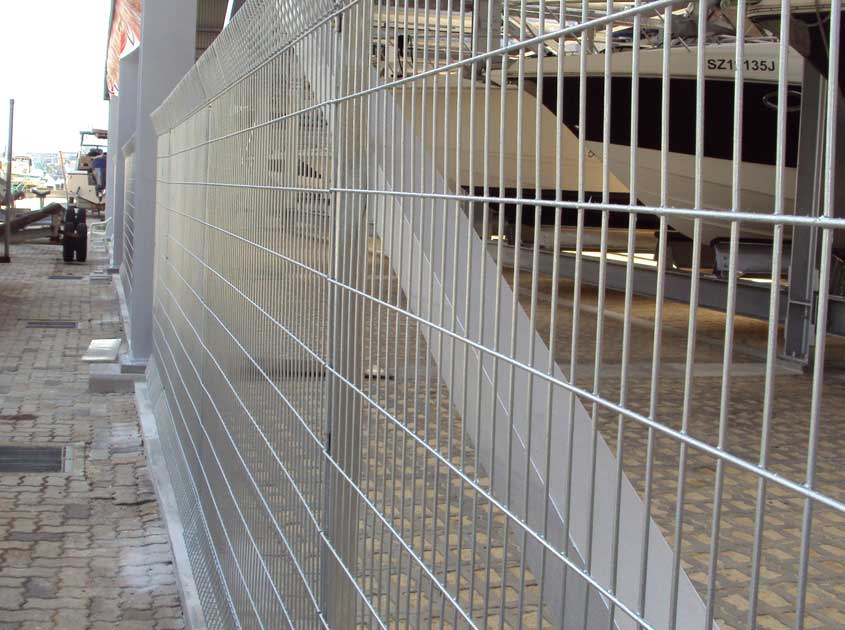
How to Install a Welded Wire Fence: A Step-by-Step Guide for Contractors
Pulished on Oct. 23, 2026
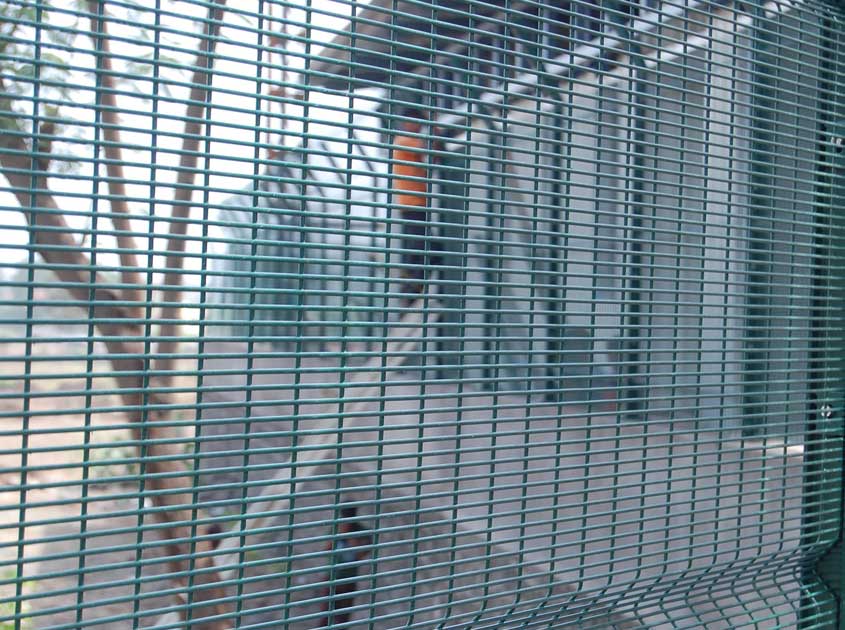
358 Fence vs Welded Wire Fence: Which Is Better for Your Project?
Pulished on Oct. 20, 2026
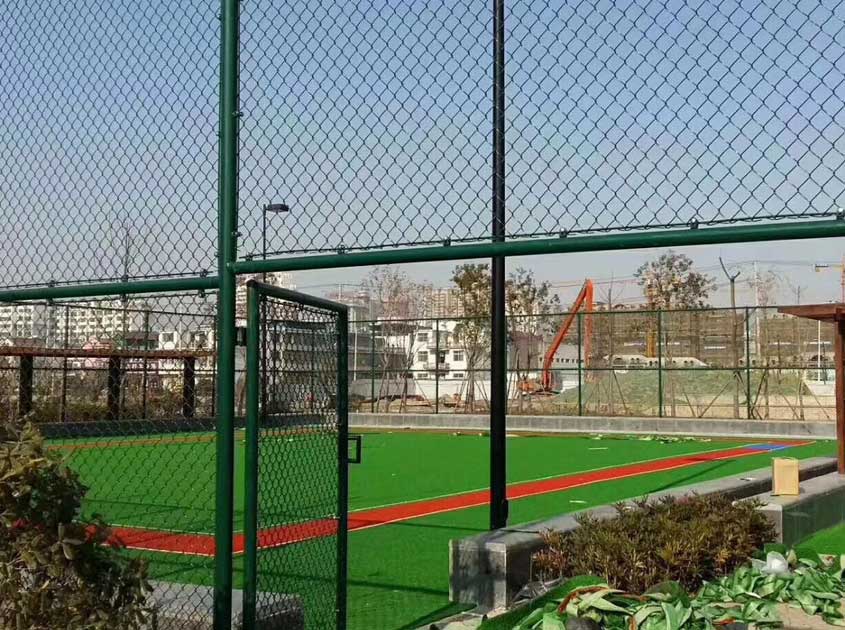
What Are the Advantages of Chain Link Fence? 8 Benefits for Commercial and Industrial Projects
Pulished on Oct. 16, 2026
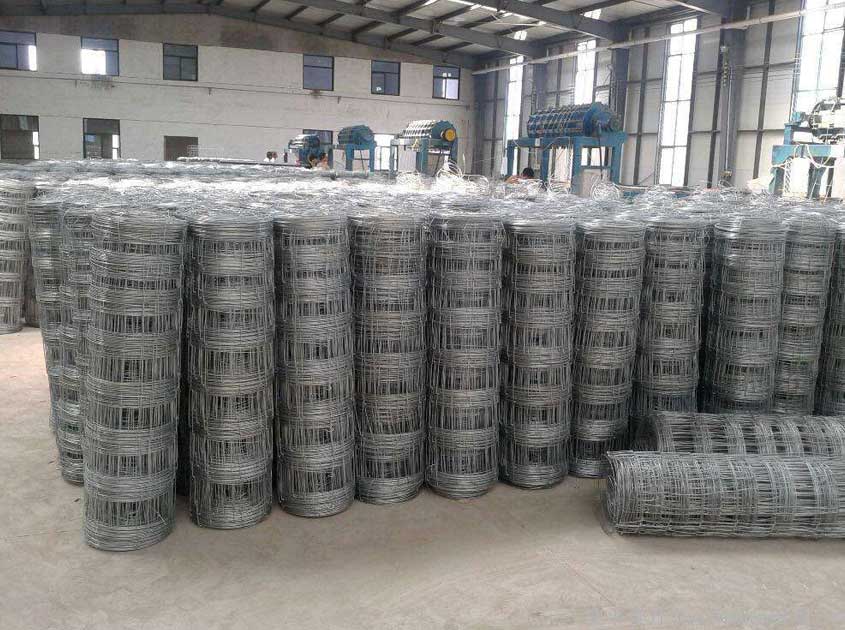
How to Choose Farm Fence for Cattle and Horses: Wire, Height and Design Guide
Pulished on Sep. 23, 2026
How Is Chain Link Fence Made? Manufacturing Process and Components
Pulished on Sep. 18, 2026
358 Security Fence vs Chain Link Fence: Security, Cost and Application Comparison
Pulished on Sep. 15, 2026
What Mesh Size Is Best for Welded Wire Fence? A Practical Selection Guide
Pulished on Nov. 09, 2026
How Much Does Chain Link Fence Cost? A Complete Guide to Material Prices, Shipping and Project Costs
Pulished on Oct. 27, 2026
How to Install a Welded Wire Fence: A Step-by-Step Guide for Contractors
Pulished on Oct. 23, 2026
358 Fence vs Welded Wire Fence: Which Is Better for Your Project?
Pulished on Oct. 20, 2026
What Are the Advantages of Chain Link Fence? 8 Benefits for Commercial and Industrial Projects
Pulished on Oct. 16, 2026
How to Choose Farm Fence for Cattle and Horses: Wire, Height and Design Guide
Pulished on Sep. 23, 2026
How Is Chain Link Fence Made? Manufacturing Process and Components
Pulished on Sep. 18, 2026
358 Security Fence vs Chain Link Fence: Security, Cost and Application Comparison
Pulished on Sep. 15, 2026