EN
EN SP
SP FR
FR
- Home
- About Us
- Products
- Service
- Project
- News
- Contact Us
Pulished on Sep. 15, 2026
When choosing a security fence for an industrial facility, warehouse, utility site, airport, school, or commercial property, two common options are 358 security fence and chain link fence.
Both can provide perimeter protection, but they are designed with very different priorities.
Chain link fence is widely used because it is economical, flexible, easy to install, and available in many heights and coatings. 358 security fence, on the other hand, is designed specifically for high-security applications, using a narrow mesh opening and rigid welded construction to make climbing and cutting more difficult.
So, which is more secure: 358 fence or chain link fence?
In general, 358 security fence provides a higher level of physical security, particularly where anti-climb and anti-cut performance are important. Chain link remains an excellent choice when the project requires a practical and economical perimeter fence without the higher cost of a high-security system.
The right choice depends on the security level, budget, site conditions, and application.
What Is 358 Security Fence?
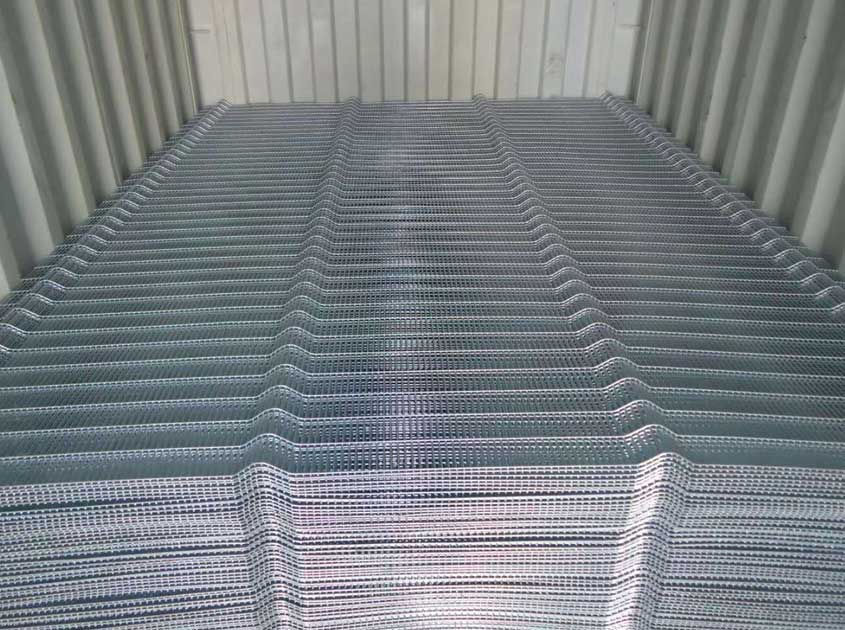
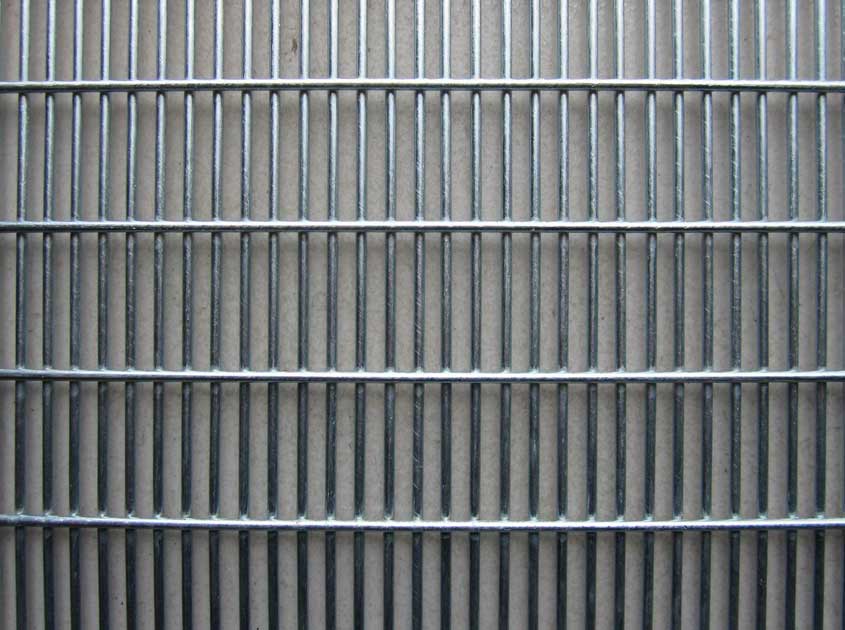
358 security fence is a rigid welded wire security fencing system characterized by its very small mesh opening.
The name “358” comes from its approximate mesh dimensions:
3 inches × 0.5 inch × 8 gauge
This corresponds to approximately:
76.2 mm × 12.7 mm
The narrow horizontal and vertical openings create a dense welded panel that is difficult to climb and difficult to cut through using conventional hand tools.
Typical 358 security fencing systems include:
Welded 358 security panels
Steel posts
Security fixings
Anti-tamper fasteners
Gates
Optional additional security features
The system is commonly used around sites where perimeter security is a major concern.
What Is Chain Link Fence?
Chain link fence is manufactured by weaving steel wire into a diamond-shaped mesh pattern.
It is one of the most widely used fencing systems in the world.
Common chain link specifications include different:
Mesh openings
Wire diameters
Fence heights
Galvanized coatings
PVC coatings
Post sizes
Top and bottom rail configurations
Typical applications include:
Residential boundaries
Industrial properties
Warehouses
Sports fields
Farms
Construction sites
Schools
Parks
Temporary perimeter protection
Its major advantages are relatively low cost, flexibility, easy installation, and broad availability.
358 Fence vs Chain Link Fence: Security Comparison
The biggest difference between these two systems is their approach to security.
Feature
358 Security Fence
Chain Link Fence
Mesh opening Very small Usually larger
Structure Rigid welded panel Flexible woven mesh
Anti-climb performance Excellent Moderate
Cutting resistance High Lower
Visibility Excellent Good
Flexibility Low High
Installation More specialized Relatively simple
Initial cost Higher Lower
Typical use High-security sites General perimeter fencing
The table provides a general comparison. Actual performance depends on wire diameter, fence height, installation quality, posts, fixings, and the overall security system.
1. Which Fence Is More Difficult to Climb?
This is one of the biggest advantages of 358 security fencing.
The 358 mesh opening is so narrow that it provides very little space for a person's hands or feet.
This makes the fence difficult to use as a ladder.
Chain link fencing has a diamond-shaped opening that provides more opportunities for a person to place their hands and feet while climbing.
This does not mean every chain link fence is easy to climb. Fence height, wire diameter, top configuration, and additional security measures all affect climbing difficulty.
However, when anti-climb performance is a major requirement, 358 security fencing generally has the advantage.
2. Which Fence Is More Resistant to Cutting?
358 security fence also has an advantage when resistance to unauthorized cutting is important.
The welded construction and narrow mesh pattern make it difficult to insert conventional cutting tools through the panel.
Chain link mesh can potentially be cut by accessing individual wires within the woven structure.
A heavier chain link specification can improve resistance, but the basic structure remains different from a rigid 358 panel.
For facilities where perimeter intrusion is a serious concern, 358 fencing is therefore often considered a more appropriate security solution.
It is important to understand that no ordinary fence should be described as completely “cut-proof.” Determined attackers may use specialized tools or equipment.
The practical objective is to increase the time, effort, noise, and difficulty required to breach the perimeter.
3. Which Fence Provides Better Visibility?
Interestingly, 358 security fencing provides very good visibility despite its high-security design.
The small mesh openings create a dense appearance up close, but the fence can still allow people, lighting, and security cameras to monitor the area beyond the perimeter.
This is particularly useful for:
CCTV surveillance
Security patrols
Industrial facilities
Warehouses
Utility sites
Airports
Data centers
Chain link also provides good visibility because of its open diamond pattern.
However, the more rigid structure of 358 fencing can provide a more controlled and security-oriented perimeter appearance.
4. Which Fence Is Stronger?
It is tempting to say that 358 fence is simply “stronger,” but the comparison requires some qualification.
358 fence is a rigid welded panel system, while chain link is a flexible woven mesh system.
The rigid construction of 358 fencing provides excellent resistance to deformation and makes it difficult to bend the panel away from its supporting posts.
Chain link can flex and deform more easily.
However, chain link can also be manufactured using heavier wire and supported by strong posts, rails, and tension systems.
Therefore, strength should not be judged only by the fence type.
A proper comparison should consider:
Wire diameter
Mesh configuration
Panel dimensions
Post size
Post spacing
Fixing system
Foundation
Fence height
The complete fencing system determines the final performance.
5. Which Fence Is More Suitable for High-Security Sites?
If the primary objective is perimeter security, 358 fence is generally the better choice.
Typical applications include:
Industrial Facilities
Manufacturing plants may need to protect equipment, materials, vehicles, and restricted areas.
Warehouses and Logistics Centers
High-value inventory and large storage areas can require controlled perimeter access.
Airports
Airport perimeter fencing requires visibility combined with strong resistance to unauthorized access.
Power and Utility Facilities
Substations and utility infrastructure can require enhanced perimeter protection.
Data Centers
Data centers often require controlled physical access and a highly secure external perimeter.
Government and Institutional Facilities
Sensitive facilities may use high-security welded mesh fencing together with controlled gates, CCTV, and access systems.
6. When Is Chain Link Fence the Better Choice?
358 security fencing is not automatically the best option for every project.
Chain link is often the more practical choice when:
The security requirement is moderate
The project has a large perimeter
Budget is a major consideration
Flexible fencing is preferred
The terrain is irregular
Fast installation is important
Easy repairs are required
The site is agricultural or recreational
For example, a warehouse requiring basic boundary control may not need a high-security 358 system.
Likewise, a sports field, farm, or residential property will often benefit from the lower cost and flexibility of chain link fencing.
7. Which Fence Costs More?
In most projects, 358 security fence has a higher initial material and installation cost than standard chain link fence.
There are several reasons.
358 fencing normally requires:
Heavier welded panels
More specialized posts
Security fixings
More rigid installation
Additional accessories
Chain link fencing can often be installed using relatively simple posts, tension wire, fittings, and mesh rolls.
However, buyers should not compare only the price per square meter.
The total project cost can include:
Fence + posts + gates + fittings + foundations + labor + transportation + maintenance
For a high-security project, the additional cost of 358 fencing may be justified if it significantly improves the difficulty of unauthorized access.
For a large low-security perimeter, chain link may provide better overall value.
8. 358 Fence vs Chain Link: Installation Differences
Another important difference is installation method.
Chain link is supplied in rolls and can adapt relatively well to changes in terrain.
Installers can tension the mesh between posts and make adjustments during installation.
358 fencing is generally supplied as rigid panels.
The posts therefore need to be positioned accurately so that the panels can be installed correctly.
This can make 358 fencing more demanding during installation.
However, the resulting structure is rigid, uniform, and visually consistent.
For large commercial projects, proper installation is especially important because even a high-security fence can have weak points if the posts, fixings, gates, or foundations are poorly designed.
9. Galvanized vs PVC-Coated Options
Both 358 fence and chain link fence can be supplied with different surface finishes.
Common options include:
Hot-dip galvanized
Galvanized and powder coated
PVC-coated wire for chain link
Powder-coated steel panels for 358 fence
For outdoor projects, corrosion resistance should be considered according to the environment.
For example, a normal inland industrial site may have different coating requirements from a coastal location with greater exposure to moisture and salt.
The coating should therefore be specified according to the project environment rather than simply choosing the cheapest finish.
10. Which Fence Has a Longer Service Life?
There is no single service-life number that applies to every fence.
Actual durability depends on:
Steel quality
Wire diameter
Zinc coating
Powder coating
Installation
Drainage
Climate
Pollution
Salt exposure
Maintenance
A properly specified galvanized or coated fence can provide long-term outdoor performance, but buyers should evaluate the actual coating specification instead of relying on general claims such as “20 years” or “30 years.”
For harsh environments, discussing the coating system with the manufacturer is particularly important.
11. Can Chain Link Be Made More Secure?
Yes.
A chain link fence can be upgraded considerably.
Possible security improvements include:
Heavier wire
Smaller mesh opening
Increased fence height
Stronger posts
Top rails
Tension systems
Security gates
Barbed wire
Razor wire
Anti-climb additions
CCTV
Access control
This can make chain link suitable for many industrial and commercial security applications.
However, when anti-climb and anti-cut performance are the primary requirements, a purpose-designed 358 system can provide a more suitable starting point.
12. Can 358 Fence Be Used With Security Systems?
Yes.
358 fencing works particularly well as part of an integrated perimeter security system.
It can be combined with:
CCTV cameras
Infrared detection
Motion detection
Access control
Security lighting
Electric security systems where legally and technically appropriate
Controlled vehicle gates
Pedestrian security gates
The fence itself is only one part of perimeter security.
A secure facility should also consider gates, foundations, access points, surveillance, lighting, and site layout.
13. How Should Buyers Choose Between 358 and Chain Link?
A simple decision process can help.
Choose 358 Security Fence If:
High security is the primary objective
Anti-climb performance is important
Cutting resistance is important
The facility contains valuable or sensitive assets
CCTV visibility is required
A rigid and professional appearance is preferred
The additional budget is justified
Choose Chain Link Fence If:
General perimeter protection is sufficient
Cost efficiency is important
The project has a very large perimeter
Flexible mesh is preferred
The site has uneven terrain
Easy installation and repair are priorities
The application is agricultural, recreational, residential, or commercial
14. Questions to Ask Your Fence Supplier
Before requesting a quotation, provide as much technical information as possible.
For 358 security fence, specify:
Fence height
Panel width
Mesh opening
Wire diameter
Surface treatment
Post size
Post spacing
Fixing system
Gate requirements
Quantity
For chain link fence, specify:
Mesh opening
Wire diameter
Fence height
Roll length
Galvanized or PVC-coated
Zinc coating requirement
Post specifications
Top rail or tension wire
Gate requirements
Quantity
A detailed specification allows different suppliers to quote on the same basis.
358 Security Fence vs Chain Link Fence: Quick Decision Guide
Requirement
Better Choice
Highest anti-climb performance 358 Security Fence
Higher cutting resistance 358 Security Fence
General boundary fencing Chain Link
Lowest initial cost Chain Link
Large agricultural perimeter Chain Link
Industrial high-security site 358 Security Fence
Flexible installation Chain Link
Rigid welded structure 358 Security Fence
Sports fields Chain Link
High-security utility facility 358 Security Fence
Easy field repair Chain Link
Integrated CCTV perimeter Both
Final Verdict: 358 Fence or Chain Link?
If the question is simply “Which is more secure?”, the answer is generally 358 security fence.
Its narrow mesh opening, rigid welded construction, and difficult-to-climb design make it particularly suitable for high-security perimeter applications.
However, security is not the only factor.
Chain link fence remains one of the most practical fencing solutions for general perimeter protection, especially when the project requires a large amount of fencing at a controlled cost.
The best choice depends on the actual risk level:
Low to moderate security + cost efficiency → Chain Link Fence
High security + anti-climb + anti-cut requirements → 358 Security Fence
For distributors, contractors, and project buyers, the most important step is to compare the complete fencing system rather than looking only at the mesh price. Wire diameter, mesh opening, coating, posts, fixings, gates, foundations, and installation all contribute to the final security performance.
When sourcing from China, provide your required fence height, mesh size, wire diameter, coating, quantity, and destination. A professional wire mesh manufacturer can then recommend a suitable specification for your project and prepare a detailed quotation.
Previous: None
Next: Why Choose Welded Wire Fence for Security and Protection?
358 Security Fence vs Chain Link Fence: Security, Cost and Application Comparison
Pulished on Sep. 15, 2026
Why Choose Welded Wire Fence for Security and Protection?
Pulished on Sep. 07, 2026
358 Security Fence Specifications and Applications Guide
Pulished on Aug. 27, 2026
What Is Farm Fence and What Are the Main Types?
Pulished on Aug. 26, 2026
Welded Wire Fence Types, Sizes and Applications Guide
Pulished on Aug. 20, 2026
Chain Link Fence Types, Specifications and Applications Guide
Pulished on Aug. 12, 2026
How Much Does 358 Security Fence Cost? Complete Price Guide for International Buyers
Pulished on Jul. 22, 2026
358 Security Fence vs Chain Link Fence: Which One Is Better for High Security Projects?
Pulished on Jul. 22, 2026
358 Security Fence vs Chain Link Fence: Security, Cost and Application Comparison
Pulished on Sep. 15, 2026
Why Choose Welded Wire Fence for Security and Protection?
Pulished on Sep. 07, 2026
358 Security Fence Specifications and Applications Guide
Pulished on Aug. 27, 2026
What Is Farm Fence and What Are the Main Types?
Pulished on Aug. 26, 2026
Welded Wire Fence Types, Sizes and Applications Guide
Pulished on Aug. 20, 2026
Chain Link Fence Types, Specifications and Applications Guide
Pulished on Aug. 12, 2026
How Much Does 358 Security Fence Cost? Complete Price Guide for International Buyers
Pulished on Jul. 22, 2026
358 Security Fence vs Chain Link Fence: Which One Is Better for High Security Projects?
Pulished on Jul. 22, 2026