EN
EN SP
SP FR
FR
- Home
- About Us
- Products
- Service
- Project
- News
- Contact Us
Pulished on Sep. 23, 2026
Choosing farm fencing for cattle and horses is not simply a matter of selecting the strongest wire available.
Cattle and horses have different behaviors, body sizes and fencing requirements. A fence that works well for cattle may not be the most suitable choice for horses, while a lightweight garden fence may not provide the containment needed for livestock.
For farmers, ranch operators, agricultural contractors and fencing distributors, the right fence should balance animal containment, fence height, wire spacing, visibility, durability, installation requirements and cost.
Common farm fencing options include woven field fence, fixed-knot fence, welded wire fence, pipe or rail fence, barbed wire, electric fencing and combinations of these systems.
This guide explains how to select a suitable farm fence for cattle and horses and what specifications should be checked before purchasing.
1. Start With the Animal, Not the Fence
The first question should be:
What animals will the fence contain?
Cattle and horses do not interact with fencing in exactly the same way.
Cattle
Cattle are generally large and heavy animals. Farm fencing for cattle needs to provide reliable containment while withstanding pressure from animals, weather and routine farm operations.
Important considerations include:
Overall fence height
Wire spacing
Wire diameter
Number of horizontal wires
Post spacing
Gate construction
Terrain
Visibility
For cattle, field fence, fixed-knot fence, high-tensile wire, electric fencing and combinations of these systems are commonly considered.
Horses
Horse fencing requires additional attention to visibility and safety.
Horses can run into or become caught in poorly designed fencing. Very small openings, exposed sharp wire ends or unsuitable electrified systems can create safety concerns.
For horse fencing, buyers should consider:
Clearly visible fence lines
Appropriate height
Safe wire spacing
Smooth surfaces
Properly installed posts
Gate design
Avoidance of hazardous protrusions
The strongest fence is not automatically the safest fence for horses.
2. Choose the Fence Type
Different farm fence systems provide different combinations of containment, visibility, flexibility and cost.
Woven Field Fence
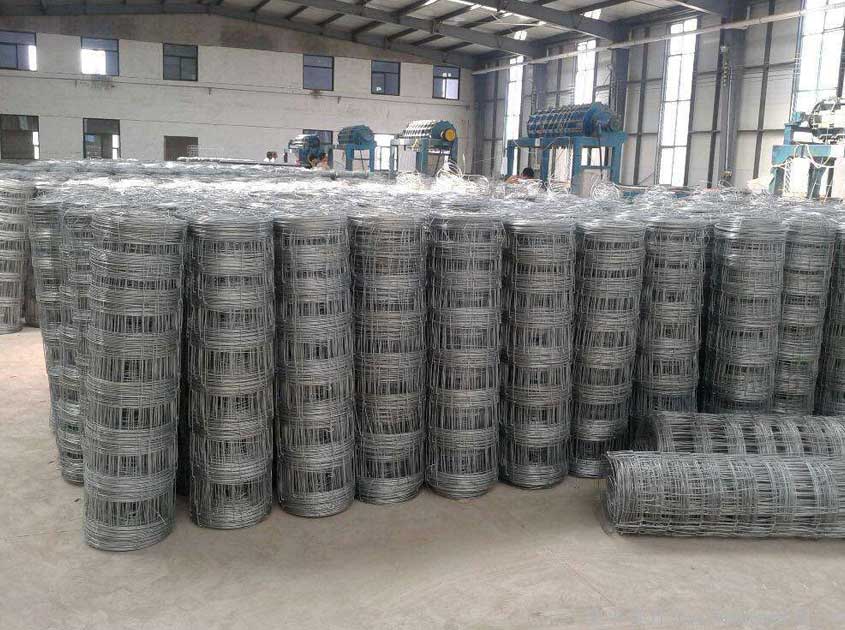
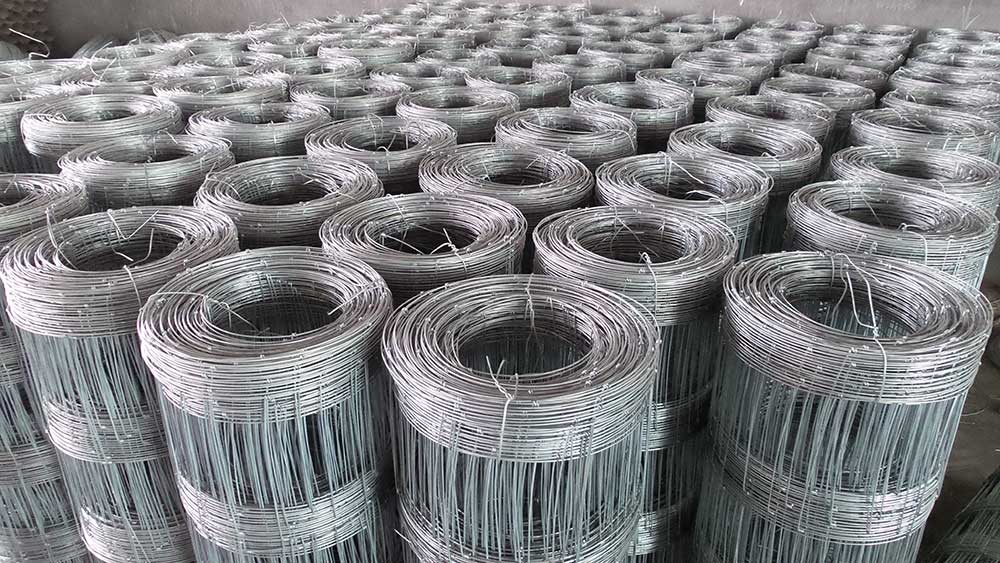
Woven field fence is one of the most common choices for agricultural applications.
Horizontal and vertical wires are mechanically joined to create a grid of rectangular openings.
It can be supplied in rolls and installed over large pasture areas.
Typical applications include:
Cattle pasture
Livestock farms
Ranch boundaries
Agricultural land
Mixed livestock areas
The mesh configuration can be customized according to animal type.
Fixed-Knot Fence
Fixed-knot fencing uses a knot structure that holds the vertical and horizontal wires together.
It is commonly considered for livestock fencing where the fence needs to maintain its shape under pressure.
Different specifications can be produced for cattle, sheep, deer and other livestock.
Welded Wire Fence
Welded wire fence consists of horizontal and vertical wires welded at their intersections.
It provides a relatively rigid mesh structure and can be useful for farm boundaries, animal enclosures and smaller livestock areas.
However, the mesh opening should be selected carefully for the animal being contained.
Barbed Wire
Barbed wire is widely used for agricultural boundaries and cattle fencing.
It can be relatively economical for large areas, but it requires careful placement and installation.
For horses, exposed barbed wire requires particular caution because of the potential for injury if an animal contacts or becomes entangled with it.
Electric Fence
Electric fencing can be used as a primary or supplementary livestock barrier.
It can also be installed alongside physical fencing to discourage animals from pushing against the main fence.
The system requires appropriate energizer capacity, grounding and regular maintenance.
Pipe, Rail or Board Fence
Rigid rail fencing provides good visibility and can be suitable for horse paddocks, entrances and areas where appearance is important.
It can require a higher initial investment than basic wire fencing.
3. Consider Fence Height
Fence height should be selected according to the animal, terrain and fence design.
There is no single height that works for every cattle or horse pasture.
For example, a cattle boundary may use a different height from a horse paddock, while a perimeter fence may be different from an internal dividing fence.
When selecting height, consider:
Animal size
Animal behavior
Jumping tendency
Terrain slope
Fence visibility
Gate height
Local agricultural requirements
For horses in particular, sufficient height and visibility are important considerations.
A fence that is too low may encourage animals to attempt to cross it.
A fence that is excessively high may increase material and installation costs without providing meaningful additional value.
The objective is to choose an appropriate height for the actual livestock and application.
4. Pay Attention to Mesh Opening
Mesh opening is one of the most important specifications when purchasing wire farm fencing.
For cattle, larger openings can often be used when the fence is designed specifically for large livestock.
For horses, the opening should be selected with greater attention to the possibility of a hoof, leg or head becoming caught.
This is why the phrase “livestock fence” is not enough when requesting a quotation.
A supplier should know:
Animal type
Mesh opening
Fence height
Wire diameter
Number of horizontal wires
Roll length
Example
A buyer might request:
Cattle Field Fence
Height: 1.2 m
Horizontal wire configuration: project-specific
Vertical wire spacing: project-specific
Line wire diameter: project-specific
Galvanized finish
Roll length: 50 m
The final specification should be adjusted according to the local farming conditions and project requirements.
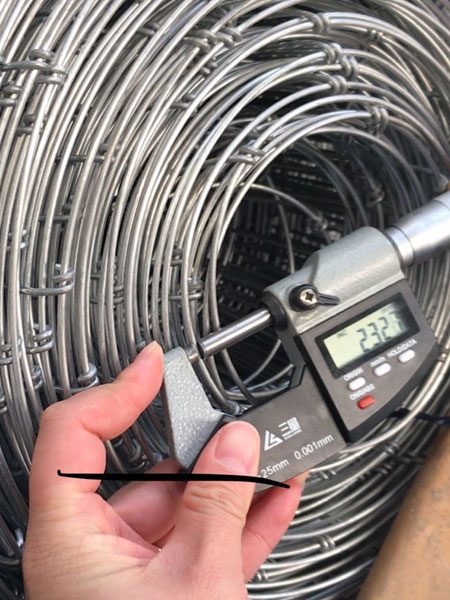
5. Wire Diameter Matters
Two fences can have the same height and mesh opening but perform differently because their wire diameters are different.
Wire diameter affects:
Fence weight
Rigidity
Resistance to deformation
Material cost
Transportation weight
Installation requirements
For agricultural projects, buyers should specify wire diameter in millimeters whenever possible.
For example:
2.5 mm wire
is more precise than simply requesting:
heavy-duty farm fence
because “heavy-duty” can mean different things to different suppliers.
6. Galvanized Farm Fence for Outdoor Use
Farm fencing is normally exposed to rain, humidity, soil, sunlight and seasonal weather changes.
Galvanized steel wire is therefore widely used for agricultural fencing.
The zinc coating helps protect the steel from corrosion.
However, not every galvanized fence has the same coating specification.
When purchasing galvanized farm fence, ask about:
Galvanizing method
Zinc coating mass
Wire diameter
Applicable standard
Whether the wire is galvanized before or after fence production
For long-term outdoor projects, the actual zinc coating specification is more useful than simply describing a product as “galvanized.”
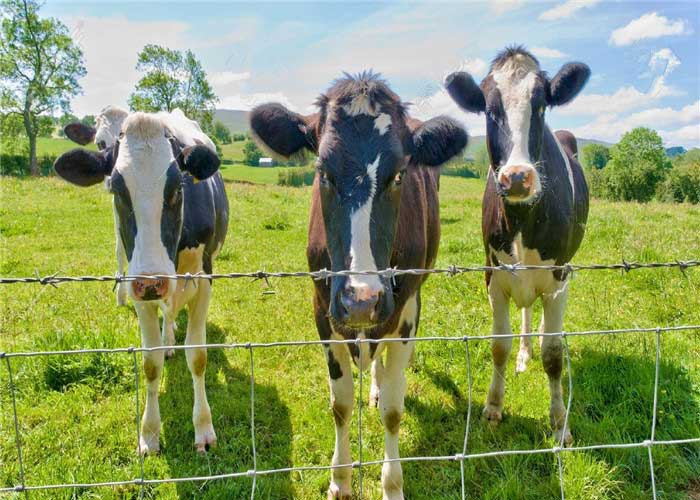
7. Think About Fence Visibility for Horses
Visibility is particularly important for horse fencing.
A horse running at speed may not react to a thin or poorly visible wire in the same way as a person walking toward it.
For this reason, horse fencing may use:
Highly visible rails
Wide tape or visible electric strands
Clearly visible wire configurations
Mesh with an appropriate opening and wire pattern
For wire fencing, visibility can sometimes be improved through fence design or the use of additional visible strands.
The objective is to make the fence line easy for the animal to recognize.
8. Consider Post Spacing and Fence Structure
The wire mesh itself is only one part of a farm fence system.
Posts provide the supporting structure.
Common post options include:
Wooden posts
Steel T-posts
Round steel posts
Concrete posts
Other agricultural fence posts
The appropriate post type and spacing depend on:
Fence height
Fence weight
Soil conditions
Terrain
Wire tension
Wind exposure
Animal pressure
Corner and end posts generally require greater attention because they carry additional tension.
For large agricultural installations, the fence should be designed as a complete system rather than purchasing mesh separately without considering the supporting structure.
9. Consider the Terrain
A flat pasture and a sloping farm require different installation approaches.
On relatively flat land, rolled field fence can often be installed continuously with standard post spacing.
On uneven terrain, the installer may need to account for:
Changes in elevation
Fence line direction
Tension
Ground clearance
Drainage
Vegetation
Corners and turns
A flexible woven fence can be advantageous on irregular terrain because it can follow gradual changes in ground level.
Rigid panels may require more careful positioning.
10. Choose the Right Fence for Cattle
For cattle, common options include:
Woven field fence
A practical choice for large pasture areas.
Advantages can include:
Large coverage from rolls
Multiple wire configurations
Galvanized options
Flexible installation
Suitable for many agricultural layouts
Fixed-knot fence
Useful when the project requires a strong and stable woven structure.
Barbed wire
Can be used for boundaries and cattle fencing, especially where the project prioritizes simple large-area coverage.
Electric fencing
Can be used as a temporary division system or supplementary barrier.
For cattle, the final choice depends on herd size, pasture design, terrain, budget and whether the fence is intended as a perimeter or internal division.
11. Choose the Right Fence for Horses
Horse fencing requires a stronger focus on safety and visibility.
Potential options include:
Rail or board fencing
Provides excellent visibility and is commonly used for paddocks and horse facilities.
Suitable welded wire mesh
Can provide a physical barrier while maintaining visibility.
The opening should be selected carefully to reduce the possibility of hoof or leg entrapment.
Horse-specific woven fencing
Some woven fence designs are produced specifically for horse applications with carefully selected openings and wire configurations.
Electric fencing
Can be used as a supplementary or temporary system when properly designed.
For horse properties, the fence should be evaluated not only for containment but also for how the horse may interact with it.
12. Perimeter Fence vs Internal Pasture Fence
The same farm may need several different fence systems.
Perimeter fence
The outside boundary normally needs to provide reliable long-term containment and clearly define the property.
It may require heavier posts, stronger corners and more durable materials.
Internal dividing fence
Internal fencing is used to divide pasture areas and manage grazing.
It may be lighter depending on the animals and management system.
Temporary fence
Temporary fencing is useful for rotational grazing, construction areas or short-term animal management.
Electric fencing or lightweight mesh systems may be considered depending on the application.
This distinction can prevent unnecessary overspending.
13. Farm Fence Cost: Look Beyond the Price per Roll
The quoted price of a farm fence is only one part of the total project cost.
The complete cost may include:
Fence rolls or panels
Posts
Gates
Clips and fasteners
Corner assemblies
Transport
Installation labor
Equipment
Maintenance
For large agricultural projects, buyers should compare the installed cost per meter or per foot, not just the price of one roll.
A cheaper fence may require more posts or more labor, changing the final project cost.
14. A Practical Specification Checklist
Before requesting quotations, prepare the following information:
Animal: Cattle / Horses / Mixed livestock
Fence Type: Field fence / Fixed-knot / Welded wire / Other
Fence Height: ___ m
Mesh Opening: ___ mm
Wire Diameter: ___ mm
Surface: Galvanized / PVC-coated / Other
Roll Length: ___ m
Total Quantity: ___ m
Post Type: Wood / Steel / Other
Gate Requirement: Yes / No
Application: Perimeter / Pasture division / Paddock
Country or Region: ___
This information allows manufacturers to provide much more accurate quotations.
15. Common Farm Fence Buying Mistakes
Mistake 1: Choosing the cheapest wire
Lower price can result from smaller wire diameter, lighter coating or a different mesh configuration.
Always compare complete specifications.
Mistake 2: Using the same fence for every animal
Cattle, horses, sheep, goats and poultry have different requirements.
A “universal livestock fence” may not be ideal for every application.
Mistake 3: Ignoring the posts
A strong mesh cannot compensate for poorly designed posts or weak corners.
Mistake 4: Using unsafe fencing for horses
Horse fencing should be evaluated from a safety perspective, particularly regarding visibility, openings and exposed components.
Mistake 5: Forgetting gates
Gates are frequently the most-used part of a farm fence system.
Their width, height, hinge arrangement, locking mechanism and post structure should be planned together with the fence.
FAQ
What type of fence is commonly used for cattle?
Woven field fence, fixed-knot fence, barbed wire and electric fencing are commonly considered for cattle. The appropriate choice depends on the pasture, animal behavior, terrain and project requirements.
What is a good fence for horses?
Horse fencing should provide reliable containment while also emphasizing visibility and safety. Rail fencing, suitable woven mesh, welded mesh and properly designed electric systems can all be considered depending on the application.
How high should a cattle fence be?
There is no universal height. It depends on cattle type, fence design, terrain and local requirements. The fence should be high enough to provide reliable containment without creating unnecessary material and installation costs.
Should horse fencing have small mesh openings?
Not necessarily. The opening should be selected to reduce the risk of a horse getting a hoof, leg or head caught in the mesh while still providing the required containment.
Is galvanized wire good for farm fencing?
Galvanized steel wire is widely used for outdoor farm fencing because the zinc coating helps protect steel from corrosion. The required coating level depends on the environment and project requirements.
Is welded wire or field fence better for cattle?
They have different structures and applications. Field fence is commonly used for large pasture areas, while welded wire provides a more rigid mesh structure and may be appropriate for specific enclosures. The correct choice depends on the livestock and fence design.
Final Thoughts
Choosing farm fence for cattle and horses requires more than comparing product prices.
Start with the animal and application, then determine the appropriate fence type, height, mesh opening, wire diameter, coating, posts and gate system.
For cattle, field fence, fixed-knot fence, barbed wire and electric fencing can all have practical applications.
For horses, visibility and safety deserve particular attention alongside containment.
For distributors and agricultural contractors, a clear specification is equally important. Instead of asking a manufacturer for simply “farm fence,” provide the animal type, fence height, mesh configuration, wire diameter, coating, roll dimensions and quantity.
This gives manufacturers enough information to quote comparable products and helps buyers select a farm fencing system suited to the actual agricultural application.
Previous: None
Next: How Is Chain Link Fence Made? Manufacturing Process and Components
How to Choose Farm Fence for Cattle and Horses: Wire, Height and Design Guide
Pulished on Sep. 23, 2026
How Is Chain Link Fence Made? Manufacturing Process and Components
Pulished on Sep. 18, 2026
358 Security Fence vs Chain Link Fence: Security, Cost and Application Comparison
Pulished on Sep. 15, 2026
Why Choose Welded Wire Fence for Security and Protection?
Pulished on Sep. 07, 2026
358 Security Fence Specifications and Applications Guide
Pulished on Aug. 27, 2026
What Is Farm Fence and What Are the Main Types?
Pulished on Aug. 26, 2026
Welded Wire Fence Types, Sizes and Applications Guide
Pulished on Aug. 20, 2026
Chain Link Fence Types, Specifications and Applications Guide
Pulished on Aug. 12, 2026
How to Choose Farm Fence for Cattle and Horses: Wire, Height and Design Guide
Pulished on Sep. 23, 2026
How Is Chain Link Fence Made? Manufacturing Process and Components
Pulished on Sep. 18, 2026
358 Security Fence vs Chain Link Fence: Security, Cost and Application Comparison
Pulished on Sep. 15, 2026
Why Choose Welded Wire Fence for Security and Protection?
Pulished on Sep. 07, 2026
358 Security Fence Specifications and Applications Guide
Pulished on Aug. 27, 2026
What Is Farm Fence and What Are the Main Types?
Pulished on Aug. 26, 2026
Welded Wire Fence Types, Sizes and Applications Guide
Pulished on Aug. 20, 2026
Chain Link Fence Types, Specifications and Applications Guide
Pulished on Aug. 12, 2026