EN
 SP
 FR

- Home
- About Us
- Products
- Service
- Project
- News
- Contact Us
Pulished on Oct. 20, 2026
Choosing between 358 fence and welded wire fence is not simply a matter of comparing mesh openings or prices. Both fencing systems use welded steel wire panels, but they are designed for different priorities.
A 358 security fence is engineered primarily to make climbing and cutting through the fence more difficult while maintaining visibility. A conventional welded wire fence focuses on creating a rigid, uniform barrier for properties, industrial sites, commercial facilities, and general perimeter protection.
For contractors, distributors, and project buyers, the right choice depends on the required security level, site conditions, installation requirements, appearance, and total project cost.
This guide compares 358 fence and welded wire fence from a practical procurement perspective, helping you identify which system best fits your application.
1. What Is 358 Fence?
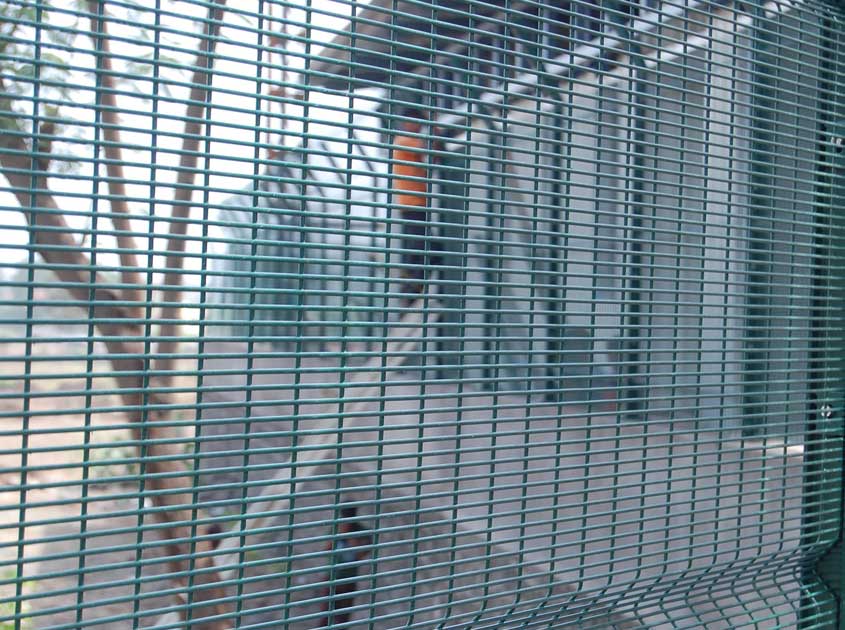
358 fence is a high-security welded mesh fencing system. Its name comes from its nominal mesh opening of approximately 3 inches × 0.5 inches, made with wire around 8 gauge in the traditional imperial specification.
Metric equivalents are approximately 76.2 mm × 12.7 mm openings and 4 mm wire, although actual wire diameter and tolerances depend on the manufacturer's specification.
The narrow rectangular openings make it difficult for an intruder to obtain a foothold or insert conventional cutting tools through the mesh. The rigid welded panels also provide a stable perimeter barrier when correctly installed with compatible posts and security fixings.
Key characteristics of 358 fence
Anti-climb design: The narrow openings provide very limited footholds.
Cutting resistance: The small apertures restrict access for many cutting tools, although no ordinary mesh fence is completely cut-proof.
High visibility: The open mesh allows security staff and cameras to monitor the area.
Rigid panel construction: Welded intersections help maintain the panel's shape.
Security-focused installation: Compatible posts, clamps, fixings, and foundations are important parts of the complete system.
358 fence is commonly considered for prisons, airports, utility facilities, industrial compounds, logistics centers, data centers, and other sites where perimeter security is a priority.
2. What Is Welded Wire Fence?
Welded wire fence is a broad category of fencing made by welding horizontal and vertical steel wires together to form a regular grid. The panels may be manufactured in different mesh sizes, wire diameters, heights, widths, and surface finishes.
Unlike 358 fence, conventional welded wire fence does not have one fixed mesh specification. Depending on its design, it may be suitable for residential boundaries, commercial properties, industrial yards, gardens, schools, agricultural areas, equipment enclosures, and general perimeter fencing.
Some welded wire fencing uses large rectangular openings, while other designs have smaller apertures and heavier wires. Therefore, the term "welded wire fence" alone does not establish its strength or security level.
Key characteristics of welded wire fence
Flexible specifications: Mesh opening, wire diameter, panel dimensions, and finishes can be customized.
Rigid grid structure: Welded intersections help the panel maintain its shape.
Broad application range: Available for decorative boundaries, commercial fencing, industrial enclosures, and other uses.
Multiple surface treatments: Common options include galvanized steel and PVC-coated finishes.
Different price levels: Material consumption, panel design, coating, and accessories affect the final cost.
An important distinction is that 358 fence is itself a type of welded wire fencing. In this article, "welded wire fence" refers to conventional welded mesh fencing rather than the specialized 358 security design.
3. 358 Fence vs Welded Wire Fence: Key Differences
The main difference is not simply whether the panels are welded. It is the relationship between mesh geometry, the intended security level, and the complete fencing system.
Comparison factor
358 fence
Conventional welded wire fence
Main purpose High-security perimeter protection General-purpose perimeter and boundary fencing
Mesh opening Very narrow rectangular apertures Multiple sizes, often larger openings
Anti-climb performance Designed to restrict footholds Depends on opening size, height, and overall design
Cutting resistance Small apertures restrict tool access Depends on wire diameter, mesh layout, and materials
Visibility Generally good through the mesh Generally good; varies with mesh size and coating
Panel rigidity Designed for security installations Depends on wire diameter, panel design, and supports
Customization Available, but security specifications constrain design Broad flexibility in dimensions and mesh patterns
Typical cost Usually higher for comparable project scope Often more economical for general-purpose applications
Installation Requires compatible security posts and fixings Varies from simple boundary systems to engineered installations
Common uses Critical infrastructure and high-security sites Commercial, industrial, residential, and general perimeter projects
These are general comparisons, not universal performance guarantees. A heavy-duty welded wire panel can be more substantial than a lightweight panel, while a complete 358 system can vary according to wire diameter, panel dimensions, coating, fixings, and installation design.
4. Security Performance: Which Fence Provides Better Protection?
Security is usually the most important factor when comparing these two systems.
Anti-climb performance
The narrow apertures of 358 fence make it difficult to place a foot or hand securely in the mesh. This design is particularly useful where climbing over the perimeter is a major concern.
Conventional welded wire fence can also provide effective boundary protection, but its performance depends heavily on mesh size and fence height. Larger openings may provide footholds, making some designs less suitable for high-security sites.
For facilities with elevated security requirements, the mesh geometry should be evaluated alongside fence height, top-edge design, access gates, and the surrounding site layout.
Resistance to cutting
The narrow openings in 358 fence restrict access to the wires, making it more difficult to position many cutting tools directly against them.
However, actual cutting resistance also depends on wire diameter, steel properties, weld quality, tool type, and the time available to an intruder. A 358 designation should not be treated as proof that a fence cannot be cut.
For conventional welded wire fence, thicker wire and suitable mesh geometry can improve resistance to damage, but the required performance should be specified for the intended application.
Visibility and surveillance
Both systems can maintain a relatively open view through the perimeter. This is valuable for facilities that use cameras, security patrols, or visual monitoring.
358 fence is especially useful when a project needs a difficult-to-climb barrier without relying on a solid wall. Conventional welded wire fence can also provide good visibility and may be sufficient where security risks are lower.
Practical recommendation: If the project specification explicitly calls for anti-climb fencing or a 358 security system, conventional welded wire fencing should not be treated as an equivalent substitute without approval from the project designer or security consultant.
5. Cost Comparison: Is 358 Fence Worth the Extra Investment?
Conventional welded wire fence is often less expensive than 358 fence when both are compared at similar dimensions and project scope. However, the cheapest panel price does not always mean the lowest installed cost.
The total project budget may include:
Mesh panels and steel content
Posts, rails, clamps, brackets, and security fixings
Galvanizing or other protective coatings
Foundations and installation labor
Gates and access-control integration
Freight, packaging, unloading, and site handling
Inspection and replacement requirements over the expected service period
When conventional welded wire fence can save money
For a warehouse boundary, commercial property, school perimeter, or general industrial enclosure with moderate security requirements, a conventional welded wire system may meet the project's needs at a lower initial cost.
Its flexible specifications also allow buyers to select a mesh opening and wire diameter that match the application instead of paying for a specialized security configuration that is not required.
When 358 fence may justify the investment
For airports, correctional facilities, critical infrastructure, sensitive industrial compounds, and other high-security projects, the additional cost may be justified by the required anti-climb design and restricted tool access.
The key question is not whether 358 fence costs more. It is whether a lower-cost alternative can satisfy the project's security requirements.
A useful procurement approach is to compare two complete quotations with the same fence height, total length, coating requirements, gate scope, post spacing assumptions, and installation boundaries. Comparing only the price per square meter can produce a misleading result.
6. Galvanized vs PVC-Coated Finishes
Both 358 fence and conventional welded wire fence may be supplied with protective surface treatments. The correct option depends on the environment, appearance requirements, and project specification.
Galvanized finish
Galvanizing provides a zinc coating that helps protect steel against corrosion. The coating process, zinc coverage, coating mass, and fabrication sequence all influence the result.
For outdoor projects, buyers should clarify whether the panels are galvanized before welding, galvanized after welding, or produced using another specified coating process. The same terminology should be applied consistently when comparing supplier quotations.
PVC-coated finish
PVC-coated fencing adds a polymer layer over the underlying wire or metal coating. It can provide a colored appearance and an additional protective layer, depending on the product construction and coating quality.
Buyers should verify the underlying steel protection, coating adhesion, finished wire diameter, and suitability for the intended climate.
For either fence type, coastal exposure, industrial pollution, standing water, damaged coatings, and maintenance practices can affect corrosion behavior. No finish should be selected solely on the basis of its color or marketing description.
7. Installation: Why the Complete System Matters
A fence panel does not work independently of its supporting structure. Even a well-manufactured mesh panel may perform poorly if the posts, fixings, foundations, or installation layout are unsuitable.
Installing a 358 security fence
A 358 system typically uses compatible security posts and purpose-designed clamps or fixings. The installation may require careful attention to panel alignment, fixing security, fence height, ground conditions, and gate interfaces.
For security-sensitive sites, project specifications may also cover anti-tamper fixings, foundations, topping systems, and integration with surveillance or access-control equipment.
Installing conventional welded wire fence
Conventional welded wire fence may use posts with clamps, brackets, rails, or other compatible attachment systems. Some configurations are relatively straightforward to install, while heavier industrial or security applications require engineered supports and appropriate foundations.
Ground slopes, soil conditions, corner bracing, gate openings, and wind exposure can affect the installation design for both systems.
Before ordering, confirm whether the quotation includes panels only or the complete fencing package. A low panel price may exclude posts, gates, fittings, and other items needed to complete the perimeter.
8. Which Fence Is Better for Different Applications?
The best option depends on the consequence of unauthorized access and the level of protection required.
Application
Recommended starting point
Reason
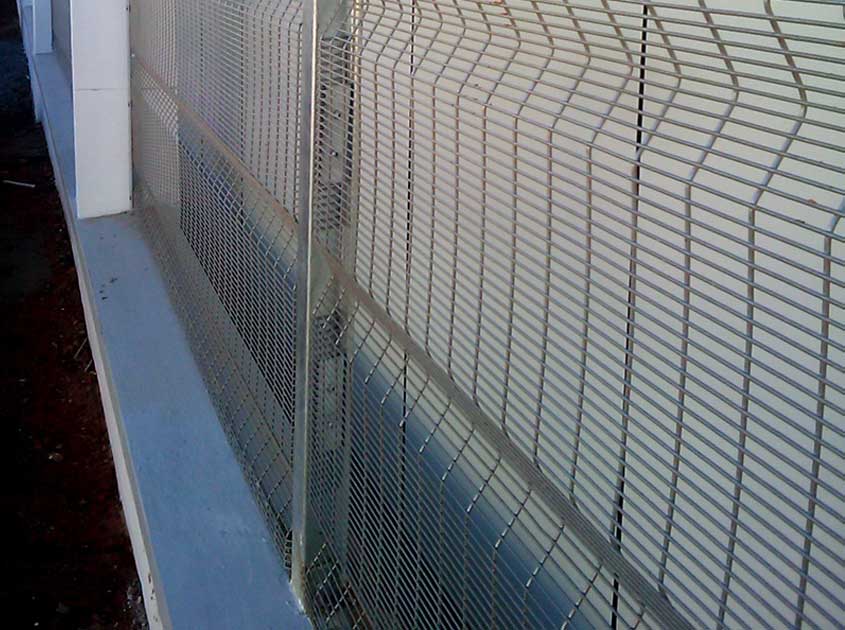
Airport perimeter 358 fence or a specified high-security system Anti-climb design and perimeter surveillance
Correctional facility 358 fence or an engineered security system Elevated security requirements
Data center or utility compound 358 fence where the risk assessment requires it Security-focused mesh geometry
Industrial warehouse Conventional welded wire or 358 fence Depends on site risk and asset value
Commercial property boundary Conventional welded wire fence Flexible specifications and cost options
School or public facility Either system, depending on risk assessment Balance access control, visibility, and budget
Residential or garden boundary Conventional welded wire fence Broad choice of heights, mesh sizes, and finishes
Equipment enclosure Conventional welded wire fence or specialized security mesh Depends on access restrictions and equipment risk
These recommendations are starting points rather than substitutes for local building codes, project specifications, or professional security assessments.
For example, an industrial warehouse storing high-value goods may require more protection than another warehouse with similar dimensions. Conversely, a conventional welded wire fence may be entirely adequate for a low-risk boundary where the main purpose is to define a property line.
9. What Should Buyers Check Before Requesting a Quotation?
Whether you select 358 fence or conventional welded wire fence, a clear specification helps suppliers provide comparable quotations and reduces the risk of ordering the wrong product.
Technical specification checklist
Fence type: 358 security fence or conventional welded wire fence.
Fence height and total length: Include the number of sides, corners, and gate openings.
Mesh opening: Specify the nominal horizontal and vertical dimensions.
Wire diameter: State the required diameter and tolerance, if applicable.
Panel dimensions: Confirm width, height, edge configuration, and panel arrangement.
Material and coating: Specify steel grade if required, galvanizing process, coating requirements, and color.
Posts and fixings: Confirm post dimensions, spacing, brackets, clamps, and fasteners.
Gates and accessories: State the number, dimensions, opening direction, and access-control requirements.
Installation conditions: Provide information about terrain, foundations, wind exposure, and local project requirements.
Packing and shipping: Confirm bundle protection, loading method, destination port, and delivery terms.
For international buyers, drawings or a bill of quantities can be particularly helpful. They allow the supplier to distinguish between a panel-only order and a complete perimeter fencing package.
Example RFQ specification
Item
Example requirement
Fence type 358 anti-climb fence
Fence height 2.4 m
Panel width 2.5 m
Wire diameter 4.0 mm, subject to project specification
Mesh opening Approximately 76.2 × 12.7 mm
Surface finish Galvanized or specified coated finish
Accessories Matching posts, clamps, and fasteners
Quantity Total perimeter length and gate schedule to be confirmed
Delivery Destination port and Incoterm to be confirmed
The dimensions above are illustrative only. Always use the approved project specification where one exists.
10. Why Work With an Experienced Fence Manufacturer?
For importers, distributors, contractors, and project developers, supplier evaluation should go beyond the product name.
A reliable manufacturer should be able to explain the relationship between mesh dimensions, wire diameter, coating, panel construction, and the complete installation system. Clear technical documentation also helps buyers avoid quotations that appear cheaper only because important components or specifications have been omitted.
Qunkun Metal is based in Anping, Hebei, China, and has more than 30 years of wire mesh manufacturing and export experience. Its product range includes welded wire mesh and fencing products for different commercial, industrial, and project applications.
When evaluating a supplier, buyers can ask for:
Technical drawings and detailed product specifications
Available coating options and inspection documentation
Confirmation of panel, post, and accessory compatibility
Sample approval or pre-production confirmation where appropriate
Packing details and shipment planning
A quotation that clearly separates product scope and optional items
The objective is to purchase a fencing system that matches the project's actual requirements, rather than choosing a product based on its name alone.
Frequently Asked Questions
Is 358 fence stronger than welded wire fence?
Not automatically in every structural sense. 358 fence is designed around narrow mesh openings that restrict climbing and access for cutting tools. The strength and durability of any fence also depend on wire diameter, steel properties, weld quality, supports, fixings, and installation.
Is 358 fence a type of welded wire fence?
Yes. 358 fence is a specialized welded mesh fencing system. The term "welded wire fence" is broader and includes many conventional mesh configurations with different openings, wire diameters, and security characteristics.
Is welded wire fence cheaper than 358 fence?
Conventional welded wire fence is often less expensive for general-purpose applications. Actual prices depend on material consumption, dimensions, coatings, panel design, accessories, order quantity, and shipping. Compare quotations using equivalent specifications and scope.
Can welded wire fence replace 358 fence?
It may be possible if the project security requirements allow it, but the two should not be considered interchangeable by default. Where a contract or risk assessment specifies 358 anti-climb fencing, any alternative should be reviewed and approved by the responsible designer or security authority.
Which fence is better for outdoor use?
Both can be suitable outdoors when the materials, coating system, and installation are appropriate for the environment. The choice should consider zinc coating requirements, polymer coating quality if used, local corrosion exposure, maintenance, and the expected service conditions.
What is the difference between 358 fence and 358 mesh?
"358 mesh" generally describes the narrow-aperture welded mesh used in a security fence panel. "358 fence" usually refers to the installed fencing system, potentially including panels, posts, clamps, fixings, gates, and other components.
What information is needed for an accurate fence quotation?
Provide the fence type, height, total length, mesh opening, wire diameter, surface finish, post and fixing requirements, gate details, destination, and quantity. Drawings or a bill of quantities can help suppliers prepare a more complete quotation.
Conclusion
358 fence and conventional welded wire fence serve overlapping but different purposes.
Choose 358 fence when anti-climb performance, restricted access to the mesh, and high-security perimeter requirements are the priority. Choose conventional welded wire fence when a rigid, adaptable, and potentially more economical boundary system meets the project's required security level.
For procurement teams, the most reliable comparison is based on the complete specification and installed system—not just the mesh pattern or price per panel. Confirm the security requirements first, then compare materials, coatings, accessories, installation scope, and delivery costs.
Need help selecting a suitable fencing system for your next project? Share your required fence height, total length, mesh specification, surface finish, and application. A manufacturer can then help you compare practical options and prepare a quotation based on your project requirements.
358 Fence vs Welded Wire Fence: Which Is Better for Your Project?
Pulished on Oct. 20, 2026
What Are the Advantages of Chain Link Fence? 8 Benefits for Commercial and Industrial Projects
Pulished on Oct. 16, 2026
How to Choose Farm Fence for Cattle and Horses: Wire, Height and Design Guide
Pulished on Sep. 23, 2026
How Is Chain Link Fence Made? Manufacturing Process and Components
Pulished on Sep. 18, 2026
358 Security Fence vs Chain Link Fence: Security, Cost and Application Comparison
Pulished on Sep. 15, 2026
Why Choose Welded Wire Fence for Security and Protection?
Pulished on Sep. 07, 2026
358 Security Fence Specifications and Applications Guide
Pulished on Aug. 27, 2026
What Is Farm Fence and What Are the Main Types?
Pulished on Aug. 26, 2026
358 Fence vs Welded Wire Fence: Which Is Better for Your Project?
Pulished on Oct. 20, 2026
What Are the Advantages of Chain Link Fence? 8 Benefits for Commercial and Industrial Projects
Pulished on Oct. 16, 2026
How to Choose Farm Fence for Cattle and Horses: Wire, Height and Design Guide
Pulished on Sep. 23, 2026
How Is Chain Link Fence Made? Manufacturing Process and Components
Pulished on Sep. 18, 2026
358 Security Fence vs Chain Link Fence: Security, Cost and Application Comparison
Pulished on Sep. 15, 2026
Why Choose Welded Wire Fence for Security and Protection?
Pulished on Sep. 07, 2026
358 Security Fence Specifications and Applications Guide
Pulished on Aug. 27, 2026
What Is Farm Fence and What Are the Main Types?
Pulished on Aug. 26, 2026