EN
EN SP
SP FR
FR
- Home
- About Us
- Products
- Service
- Project
- News
- Contact Us
Pulished on Aug. 26, 2026
Farm fence is a type of agricultural fencing designed to contain livestock, protect crops, divide farmland, and define property boundaries. Unlike ordinary residential fencing, farm fencing needs to withstand outdoor weather, animal pressure, uneven terrain, and long-term exposure.
There is no single type of farm fence suitable for every agricultural property. Different farms may require different fencing systems depending on the animal species, land size, terrain, security requirements, budget, and expected service life.
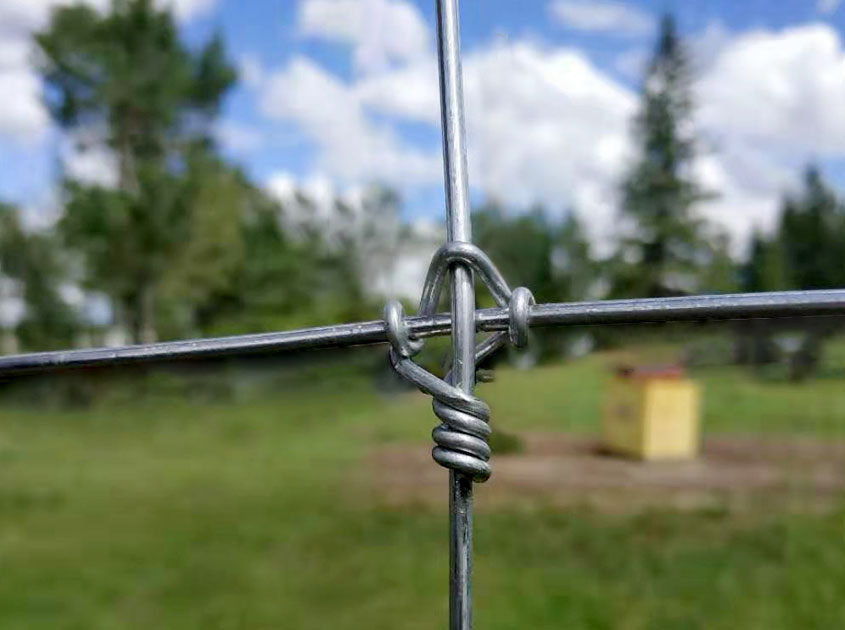
Common farm fence types include woven wire farm fence, welded wire fence, chain link fence, field fence, livestock fence, cattle fence, horse fence, and electric fence.
This guide explains what farm fence is, the main types available, their applications, and how to choose the right agricultural fencing system.
What Is Farm Fence?
Farm fence refers to fencing systems specifically designed for agricultural and rural applications.
It can be used to:
Contain livestock
Protect crops
Separate grazing areas
Divide farmland
Protect young plants and trees
Control animal movement
Define property boundaries
Protect farm buildings and equipment
Farm fencing can be manufactured from different materials, including:
Galvanized steel wire
PVC coated steel wire
High-tensile steel wire
Welded steel wire
Wood
Plastic or composite materials
Among these options, galvanized steel wire fencing is widely used because it combines strength, corrosion resistance, and cost efficiency.
Why Is Farm Fence Important?
1. Livestock Management
One of the primary purposes of agricultural fencing is to keep animals within designated areas.
A properly designed fence can help manage:
Cattle
Horses
Sheep
Goats
Pigs
Poultry
The fence needs to be designed according to the size, behavior, and strength of the animals.
2. Crop Protection
Farm fencing can prevent livestock and wild animals from entering areas where crops are being grown.
It can help protect:
Vegetables
Fruit trees
Grain crops
Seedlings
Pasture
For crop protection, the mesh opening is particularly important because smaller animals may pass through large openings.
3. Farm Zoning
Large agricultural properties often need to be divided into different areas.
Farm fences can separate:
Grazing areas
Crop fields
Animal housing
Storage areas
Roads
Water sources
This makes the farm easier to manage.
What Are the Main Types of Farm Fence?
1. Field Fence
Field fence is one of the most common agricultural fencing systems.
It is usually made from horizontal and vertical galvanized steel wires that form rectangular or variable-size openings.
Field fence is commonly used for:
Cattle
Sheep
Goats
Horses
General livestock
Its flexible structure allows it to adapt to uneven farmland.
2. Cattle Fence
Cattle fencing is designed specifically for cattle containment.
Cattle are strong animals that can place significant pressure on a fence, so the fencing system needs adequate:
Wire strength
Fence height
Post strength
Post spacing
Heavy-duty woven wire, high-tensile wire, and other reinforced fencing systems can be used depending on the farm.
3. Horse Fence
Horse fencing needs to consider both containment and animal safety.
A suitable horse fence should provide sufficient visibility and strength while minimizing the risk of animals becoming trapped or injured.
Common solutions include:
Welded wire fence
Woven wire fence
Rail-style fencing with wire mesh
Specialized horse fencing
The appropriate design depends on the horse enclosure and local requirements.
4. Sheep and Goat Fence
Sheep and goats can require smaller openings than cattle.
A smaller mesh opening can help prevent animals from:
Escaping
Getting their heads caught
Entering restricted areas
Galvanized woven wire field fence is commonly used for these applications.
5. Welded Wire Farm Fence
Welded wire fence consists of horizontal and vertical wires welded together at each intersection.
Its main advantages include:
Rigid structure
Uniform openings
Clean appearance
Easy installation
Good dimensional stability
It is commonly used for:
Poultry
Small animals
Gardens
Farm partitions
Animal enclosures
For heavy livestock, the wire diameter and supporting posts must be selected carefully.
6. Chain Link Farm Fence
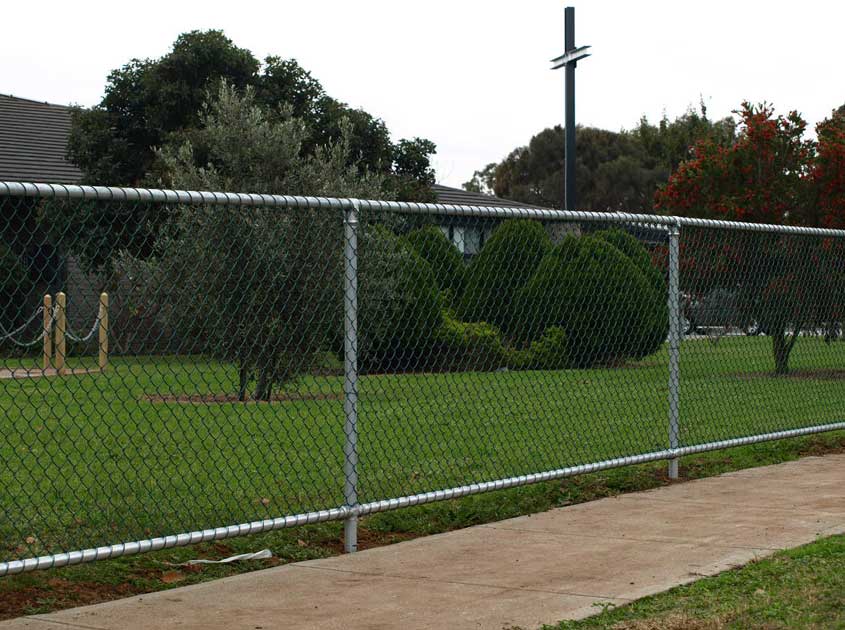
Chain link fence is made by weaving steel wire into diamond-shaped openings.
It is commonly used for:
Farm boundaries
Poultry areas
Storage areas
Equipment yards
Farm entrances
Animal enclosures
Galvanized chain link is particularly suitable for outdoor applications where corrosion resistance and economical coverage are important.
However, chain link is not always the most economical choice for very large grazing areas because specialized field fence can provide better material efficiency for livestock containment.
7. Poultry Fence
Poultry fencing is generally made from light wire mesh with relatively small openings.
Common materials include:
Galvanized hexagonal wire mesh
PVC coated hexagonal wire mesh
Fine welded wire mesh
Applications include:
Chicken runs
Duck enclosures
Goose enclosures
Poultry houses
Small bird areas
For many poultry applications, chicken wire mesh is an economical and flexible solution.
8. Farm Garden Fence
Garden fencing protects crops and plants from animals.
It can be made from:
Welded wire mesh
Hexagonal wire mesh
Chain link mesh
Plastic agricultural netting
For a small garden, lightweight mesh can be sufficient.
For larger farms, stronger galvanized fencing may be more appropriate.
9. Electric Farm Fence
Electric fencing uses energized wires to discourage animals from crossing the boundary.
It can be used for:
Cattle
Horses
Sheep
Temporary grazing areas
Electric fencing can be used as a standalone system or combined with physical fencing.
Its main advantage is that it can provide a psychological barrier without requiring a very heavy physical barrier.
The system must be installed and operated according to applicable electrical and livestock-safety requirements.
10. High-Tensile Farm Fence
High-tensile fencing uses high-strength steel wire under relatively high tension.
Advantages can include:
Long spans
Lower material weight
Good strength
Reduced maintenance in suitable applications
It is commonly considered for:
Large farms
Cattle operations
Pasture management
Large grazing areas
The installation system is important because high-tensile wire requires appropriate tensioning and posts.
Farm Fence by Animal Type
Different animals have different fencing requirements.
Animal
Common Fence Types
Important Considerations
Cattle Field fence, high-tensile fence Strength, height, posts
Horses Welded/woven fence Visibility and safety
Sheep Field fence Smaller openings
Goats Field/woven fence Escape prevention
Pigs Welded/field fence Strong lower section
Chickens Hexagonal/welded mesh Small openings
Rabbits Hexagonal/welded mesh Fine mesh
Mixed livestock Heavy field fence Opening + strength
Farm Fence by Application
Livestock Containment
The main priority is preventing animals from escaping.
The fence should be designed around:
Animal Size + Animal Behavior + Fence Strength
Crop Protection
The main priority is preventing animals from entering the crop area.
The mesh opening is often more important than extreme structural strength.
Farm Boundary
For property boundaries, consider:
Fence height
Visibility
Corrosion resistance
Terrain
Security
Installation cost
Chain link and field fence are both common options.
Temporary Farm Fence
Temporary fencing may be needed for:
Rotational grazing
Construction
Temporary animal areas
Seasonal crops
Lightweight systems or electric fencing can be practical for these applications.
What Materials Are Used for Farm Fence?
Galvanized Steel
Galvanized steel is one of the most common choices.
Advantages include:
Corrosion resistance
Good strength
Long service life
Relatively low cost
It is suitable for many outdoor agricultural environments.
PVC Coated Steel
PVC coated wire adds a polymer coating over the steel wire.
Benefits can include:
Additional surface protection
Improved appearance
Color options
Green PVC coated fencing is often used around gardens and landscaping.
Stainless Steel
Stainless steel provides higher corrosion resistance than galvanized steel but is generally much more expensive.
It is usually reserved for specialized applications where the additional corrosion resistance justifies the cost.
How to Choose the Right Farm Fence?
Step 1: Identify the Animal
First determine whether the fence is intended for:
Cattle
Horses
Sheep
Goats
Pigs
Poultry
Mixed livestock
Animal behavior is an important part of fence selection.
Step 2: Determine the Fence Purpose
Ask whether the fence is primarily for:
Livestock containment
Crop protection
Property boundaries
Farm zoning
Temporary grazing
Animal housing
A fence designed for cattle containment may be unnecessarily expensive for a vegetable garden.
Step 3: Select the Mesh Opening
The opening should be small enough to prevent the intended animals from escaping or becoming trapped.
For smaller animals:
Smaller openings are generally preferred.
For larger livestock:
Larger openings may provide better material efficiency.
Step 4: Select the Wire Diameter
Thicker wire generally provides greater strength.
However, larger wire also means:
Higher cost
Higher weight
More transportation cost
The goal is to select sufficient strength for the application.
Step 5: Consider Fence Height
Fence height depends on:
Animal species
Animal behavior
Jumping ability
Farm layout
Local regulations
Horse fencing, for example, may require different height and visibility considerations than poultry fencing.
Step 6: Consider the Terrain
Agricultural land is rarely perfectly flat.
A flexible woven field fence can often adapt better to:
Slopes
Uneven ground
Irregular boundaries
Rigid welded panels may require more careful installation on uneven terrain.
Step 7: Consider Corrosion Protection
Farm fencing is exposed to:
Rain
Humidity
Soil moisture
Animal waste
Fertilizers
Chemicals
Galvanized steel is therefore widely used for agricultural fencing.
In particularly aggressive environments, additional protection may be considered.
Field Fence vs Welded Wire Fence
Feature
Field Fence
Welded Wire Fence
Structure Woven Welded
Flexibility High Lower
Rigidity Moderate High
Uneven terrain Excellent Moderate
Livestock Excellent Good
Small animal enclosure Good Excellent
Large farm areas Excellent Good
Installation Relatively easy Easy
Typical use Pasture/livestock Gardens/animal enclosures
For large grazing areas and uneven farmland, field fence is often a practical choice.
For rigid panels and smaller enclosures, welded wire fence can be more suitable.
Field Fence vs Chain Link Fence
Feature
Field Fence
Chain Link Fence
Opening Rectangular/variable Diamond
Flexibility High High
Large farm areas Excellent Good
Livestock Excellent Good
Property boundary Good Excellent
Security Moderate Better
Material efficiency High Moderate
Typical application Pasture Boundary/security
Chain link fence is particularly useful when the farm also requires a clear and relatively secure perimeter.
How Much Does Farm Fence Cost?
Farm fence pricing depends on many variables.
The main factors include:
Fence type
Wire diameter
Mesh opening
Fence height
Material
Zinc coating
Quantity
Posts
Installation
Transportation
For B2B buyers, comparing the total installed cost is more useful than comparing the mesh price alone.
For large farms, the cost of posts and installation can represent a significant part of the project budget.
Common Mistakes When Buying Farm Fence
Choosing Based Only on Price
The cheapest mesh may not provide sufficient strength or corrosion resistance.
Using the Same Fence for Every Animal
Cattle, horses, goats, and poultry have different requirements.
A fence suitable for chickens may be completely unsuitable for cattle.
Ignoring Posts
Fence performance depends on both the mesh and its supporting structure.
Strong mesh installed on weak posts may fail.
Using Excessively Heavy Mesh
Over-specifying the fence can increase:
Material cost
Shipping cost
Installation labor
The best farm fence is not necessarily the strongest one—it is the one that provides the required performance at a reasonable total cost.
Farm Fence Selection Guide
Farm Requirement
Recommended Fence
Main Advantage
Cattle pasture Field/high-tensile fence Strength + large-area efficiency
Sheep Field fence Smaller openings
Goat enclosure Field/woven fence Escape prevention
Horse paddock Welded/woven fence Safety + visibility
Chicken run Hexagonal/welded mesh Small openings
Garden Welded/hexagonal mesh Easy installation
Farm boundary Chain link/field fence Perimeter coverage
Temporary grazing Electric/light fence Easy relocation
Equipment yard Chain link/welded fence Security
Mixed livestock Heavy field fence Versatility
Why Choose linkland fence Farm Fence?
linkland fence supplies agricultural fencing products for international distributors, farm suppliers, contractors, wholesalers, and agricultural projects.
Available products include:
Galvanized field fence
Welded wire farm fence
Chain link fence
Hexagonal wire mesh
Poultry fencing
Livestock fencing
High-tensile agricultural wire fencing
Products can be customized according to:
Wire diameter
Mesh opening
Fence height
Roll length
Zinc coating
PVC coating
Packaging
For large agricultural projects, customers can provide the animal type, fence height, mesh opening, wire diameter, total quantity, and destination so the appropriate fencing specification can be selected.
Frequently Asked Questions
What is the best type of fence for a farm?
There is no universal best farm fence. Field fence is often suitable for large livestock areas, while welded wire and hexagonal mesh are useful for smaller animals, gardens, and poultry. Chain link is commonly used for farm boundaries and areas requiring greater perimeter security.
What is the best fence for cattle?
Field fence and high-tensile fencing are commonly considered for cattle. The final design should account for cattle behavior, fence height, wire strength, posts, terrain, and local requirements.
What is the best fence for goats?
Goats are good climbers and can be difficult to contain. A woven field fence with appropriately sized openings and adequate height is commonly considered for goat enclosures.
Is galvanized farm fence good?
Yes. Galvanized steel is widely used for agricultural fencing because it combines corrosion resistance, strength, and cost efficiency.
Can chain link fence be used on a farm?
Yes. Chain link fence can be used for farm boundaries, poultry areas, equipment yards, storage areas, and some animal enclosures. For very large grazing areas, field fence may provide better material efficiency.
How long does galvanized farm fence last?
There is no single service-life figure because performance depends on zinc coating, wire diameter, climate, soil conditions, animal contact, installation, and maintenance. A higher-quality galvanized coating generally provides better corrosion protection.
Conclusion
Farm fence is more than a simple boundary. It is an important part of livestock management, crop protection, farm zoning, and agricultural property management.
The main types include:
Field Fence → Livestock and Large Pastures
Welded Wire Fence → Rigid Enclosures and Small Animals
Chain Link Fence → Farm Boundaries and Security
Hexagonal Wire Mesh → Poultry and Garden Applications
High-Tensile Fence → Large-Scale Grazing
Electric Fence → Temporary or Supplemental Animal Control
The right choice depends primarily on:
Animal Type + Application + Mesh Opening + Wire Diameter + Fence Height + Terrain + Environment
For international agricultural projects, buyers should provide these specifications when requesting quotations. This allows manufacturers to recommend a farm fence that balances strength, durability, installation requirements, and total project cost rather than simply offering the cheapest available mesh.
How to Choose Farm Fence for Cattle and Horses: Wire, Height and Design Guide
Pulished on Sep. 23, 2026
How Is Chain Link Fence Made? Manufacturing Process and Components
Pulished on Sep. 18, 2026
358 Security Fence vs Chain Link Fence: Security, Cost and Application Comparison
Pulished on Sep. 15, 2026
Why Choose Welded Wire Fence for Security and Protection?
Pulished on Sep. 07, 2026
358 Security Fence Specifications and Applications Guide
Pulished on Aug. 27, 2026
What Is Farm Fence and What Are the Main Types?
Pulished on Aug. 26, 2026
Welded Wire Fence Types, Sizes and Applications Guide
Pulished on Aug. 20, 2026
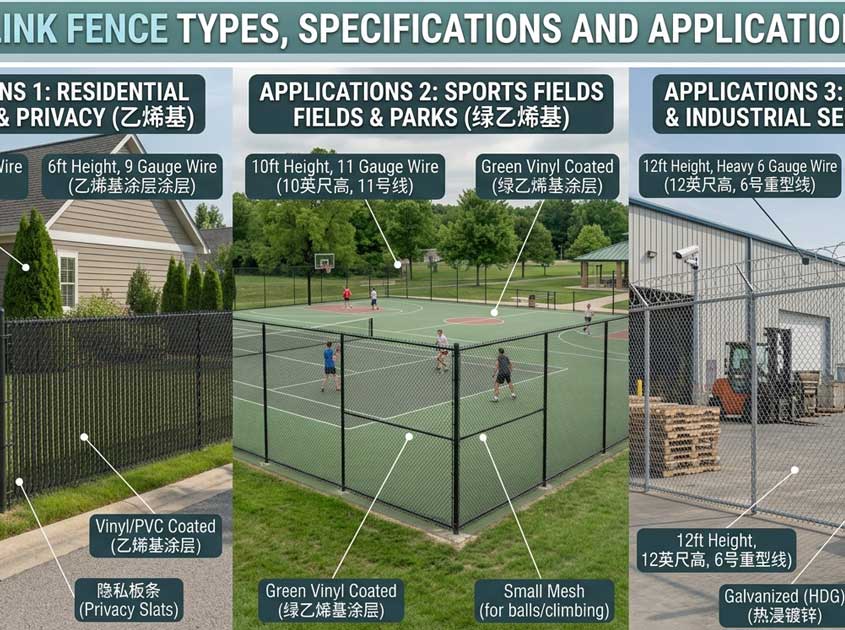
Chain Link Fence Types, Specifications and Applications Guide
Pulished on Aug. 12, 2026
How to Choose Farm Fence for Cattle and Horses: Wire, Height and Design Guide
Pulished on Sep. 23, 2026
How Is Chain Link Fence Made? Manufacturing Process and Components
Pulished on Sep. 18, 2026
358 Security Fence vs Chain Link Fence: Security, Cost and Application Comparison
Pulished on Sep. 15, 2026
Why Choose Welded Wire Fence for Security and Protection?
Pulished on Sep. 07, 2026
358 Security Fence Specifications and Applications Guide
Pulished on Aug. 27, 2026
What Is Farm Fence and What Are the Main Types?
Pulished on Aug. 26, 2026
Welded Wire Fence Types, Sizes and Applications Guide
Pulished on Aug. 20, 2026
Chain Link Fence Types, Specifications and Applications Guide
Pulished on Aug. 12, 2026