EN
EN SP
SP FR
FR
- Home
- About Us
- Products
- Service
- Project
- News
- Contact Us
Pulished on Sep. 18, 2026
Chain link fence is one of the most widely used perimeter fencing systems in the world. It can be found around residential properties, farms, warehouses, factories, sports facilities, construction sites, schools, and infrastructure projects.
Although chain link fencing has a relatively simple appearance, a complete fence system involves more than just the familiar diamond-pattern mesh.
A finished chain link fence normally consists of chain link mesh, posts, rails or support wires, tension components, fittings, and gates when required. The manufacturing process therefore includes both the production of the mesh and the preparation of the components used to install it.
So, how is chain link fence made?
The process generally involves wire preparation, mesh manufacturing, surface treatment, cutting and sizing, post and accessory production, quality inspection, system preparation, and export packaging.
This guide explains how chain link fence is manufactured and what buyers should check when sourcing a complete fencing system from a manufacturer.
What Is Chain Link Fence?
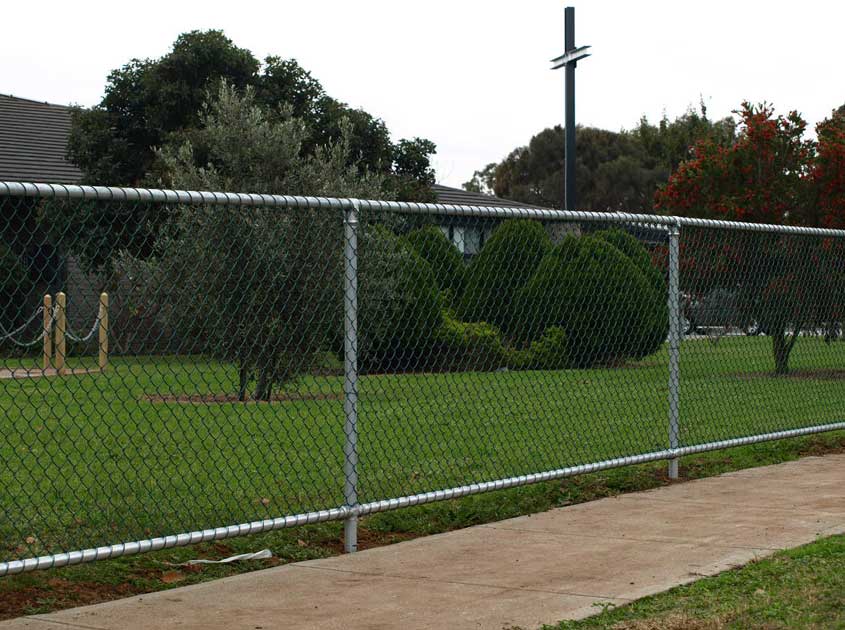
Chain link fence is a fencing system built around a flexible woven wire mesh with a diamond-shaped pattern.
The system may include:
Chain link wire mesh
Line posts
Terminal or end posts
Corner posts
Gate posts
Top rails
Tension wire
Tension bars
Brace bands
Tension bands
Rail ends
Post caps
Tie wires
Gates
Other installation fittings
The exact components depend on the fence height, installation method, project design, and local market requirements.
The mesh itself is manufactured by mechanically forming wire into a continuous diamond pattern. The supporting components then hold the mesh in position and transfer loads to the ground.
Chain Link Fence Manufacturing at a Glance
A typical production process can be summarized as:
Steel wire → Wire preparation → Chain link mesh weaving → Surface treatment → Mesh sizing → Edge finishing → Post production → Accessory preparation → Quality inspection → System matching → Packaging
Not every manufacturer follows exactly the same sequence.
For example, galvanized wire may be prepared before weaving, while other production methods can involve galvanizing the finished mesh.
PVC coated chain link fencing also requires an additional coating process.
1. Selecting the Steel Wire
The first stage is selecting the wire used to manufacture the chain link mesh.
Standard chain link fencing commonly uses steel wire.
Depending on the product specification, manufacturers may use:
Galvanized steel wire
PVC coated steel wire
PVC coated galvanized wire
Black steel wire
Stainless steel wire for specialized applications
The wire diameter is one of the most important specifications.
Common diameters may range from relatively light fencing wire to heavier wire for more demanding applications.
For example, a project may specify approximately:
2.0 mm
2.5 mm
3.0 mm
3.5 mm
4.0 mm
The actual available range depends on the manufacturer's equipment and the required product.
For international purchasing, it is generally better to specify the wire diameter directly in millimeters instead of relying only on gauge.
2. Wire Drawing and Preparation
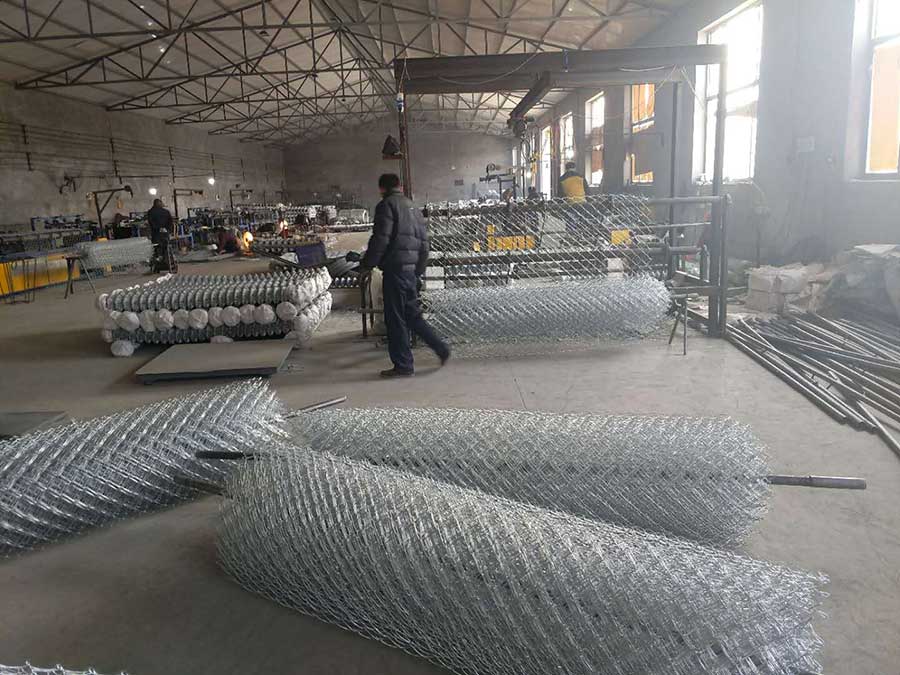
If the incoming steel wire is not already at the required diameter, it may pass through a wire drawing process.
Wire drawing reduces the diameter of the steel wire by pulling it through dies.
This allows the manufacturer to produce the diameter required for the chain link mesh.
Wire preparation can also include processes intended to improve consistency and suitability for subsequent weaving.
The manufacturer needs to control:
Wire diameter
Surface condition
Straightness where applicable
Material consistency
Coil handling
Consistent wire dimensions are important because variations can affect the appearance and dimensions of the finished mesh.
3. Galvanizing the Wire
For galvanized chain link fence, zinc protection is an important part of the manufacturing process.
There are different ways to produce galvanized chain link mesh.
Galvanized Before Weaving
The steel wire is galvanized before entering the chain link weaving machine.
The coated wire is then formed into the diamond mesh pattern.
Galvanized After Weaving
The mesh is woven first and then receives a galvanizing treatment.
The exact manufacturing route can affect the coating and appearance of the finished product.
For buyers, the important point is to confirm:
Galvanizing method
Zinc coating specification
Wire diameter
Mesh opening
Product standard where applicable
Simply writing "galvanized chain link fence" does not fully define the product.
4. Weaving the Chain Link Mesh
This is the most recognizable stage of chain link fence production.
The prepared wire enters a chain link weaving machine.
The machine bends and forms the wire into a continuous diamond pattern.
Unlike welded wire mesh, the wires are not welded together at every intersection.
Instead, the wire is mechanically interwoven to create the flexible chain link structure.
The machine controls the shape and dimensions of the diamond openings.
Common mesh openings may include:
1 inch
1-1/2 inches
2 inches
2-1/4 inches
2-3/8 inches
2-1/2 inches
3 inches
4 inches
Metric specifications are also commonly used.
The appropriate opening depends on the application.
5. Controlling Mesh Opening
Mesh opening is measured according to the distance between the wires forming the diamond pattern.
For example, a commonly specified opening is approximately:
2 × 2 inches
or:
50 × 50 mm
The actual specification and measurement method should be confirmed with the manufacturer.
A smaller opening produces a denser mesh pattern.
A larger opening creates a more open structure and generally uses less wire per unit area when other specifications are comparable.
Mesh opening affects:
Visibility
Containment
Material usage
Appearance
Weight
Cost
However, opening size should not be considered independently from wire diameter.
A 50 mm opening with 2.5 mm wire is a different product from a 50 mm opening with 4.0 mm wire.
6. Setting the Mesh Width
Once the diamond mesh is continuously produced, the machine or production process controls the finished width.
Chain link mesh is commonly produced in widths corresponding to standard fence heights.
Examples may include:
1.0 m
1.2 m
1.5 m
1.8 m
2.0 m
2.4 m
3.0 m
Custom widths may also be available.
The required width should normally be confirmed before production because it affects roll dimensions, container loading, and installation planning.
7. Finishing the Mesh Edges
The edges of chain link mesh can be configured in different ways.
Two common options are:
Knuckled Edge
The wire ends are bent into a relatively closed configuration.
Twisted Edge
The wire ends are twisted together.
The appropriate configuration depends on project specifications and local market requirements.
Edge finishing is important because it affects handling and installation.
For large orders, buyers should include the edge requirement in the purchase specification instead of assuming that all chain link mesh has the same edge treatment.
8. PVC Coating the Chain Link Mesh
PVC coated chain link fencing requires an additional coating process.
The steel core may first receive a galvanized coating and then be covered with a PVC or polymer layer.
The coating provides a colored finish and an additional layer between the steel core and the surrounding environment.
Common colors include:
Green
Black
Dark green
Other project-specific colors
One specification detail is particularly important:
Is the quoted wire diameter the steel core diameter or the finished coated diameter?
For example:
3.0 mm galvanized steel wire + PVC coating
is not the same specification as:
3.0 mm finished PVC coated wire
Buyers should request clarification before comparing quotations.
9. Producing the Fence Posts
A complete chain link fence requires a supporting structure.
Posts are commonly produced from steel tubing or other specified steel sections.
Depending on the project, posts may include:
Line posts
End posts
Corner posts
Gate posts
Intermediate posts
The post diameter, wall thickness, length, and surface treatment depend on the fence design.
Posts may be:
Galvanized
Powder coated
PVC coated in some systems
Painted
Manufactured with other specified finishes
The post needs to be compatible with the fence height and installation method.
A complete fencing quotation should therefore specify both the mesh and the supporting posts.
10. Manufacturing Top Rails and Support Components
Some chain link fence systems use top rails.
Top rails run along the upper portion of the fence and connect the posts.
Depending on the system, additional support components may include:
Brace rails
Tension wires
Tension bars
Rail ends
Post caps
Brace bands
Tension bands
Tie wires
These components help hold the mesh in position and maintain the intended fence configuration.
Not every chain link fence requires every component.
The required hardware depends on the fence design and installation method.
11. Producing Chain Link Fence Gates
For complete fencing projects, manufacturers may also supply chain link gates.
A chain link gate generally consists of:
Steel gate frame
Chain link mesh
Hinges
Latch or locking hardware
Gate posts
Surface treatment
The gate frame may be produced from steel tube or another specified profile.
The mesh installed inside the gate frame should normally match the main fence in terms of:
Mesh opening
Wire diameter
Surface treatment
Color
This creates a consistent appearance across the complete fence system.
12. Cutting and Preparing Components
After the main components are manufactured, they may need to be cut to the required project dimensions.
For example:
Posts are cut to specified lengths.
Top rails are cut according to the fence layout.
Gate frames are assembled according to the gate dimensions.
Mesh rolls are prepared according to the requested width and length.
Fittings are sorted according to the system configuration.
For export orders, component matching is particularly important.
A supplier may need to prepare different post types, fittings, and mesh specifications for the same project.
13. Quality Inspection
Quality control is an important part of chain link fence manufacturing.
Inspection may cover both the mesh and the supporting components.
Mesh Inspection
Important checks can include:
Wire diameter
Mesh opening
Mesh width
Roll length
Edge configuration
Weaving consistency
Surface condition
Galvanizing or coating
Post Inspection
Typical checks include:
Outside diameter or profile
Wall thickness
Length
Surface treatment
Straightness
Connection compatibility
Accessory Inspection
Fittings may be checked for:
Dimensions
Surface treatment
Compatibility
Quantity
Packaging
For larger projects, buyers may also arrange third-party inspection where appropriate.
14. Matching the Complete Fence System
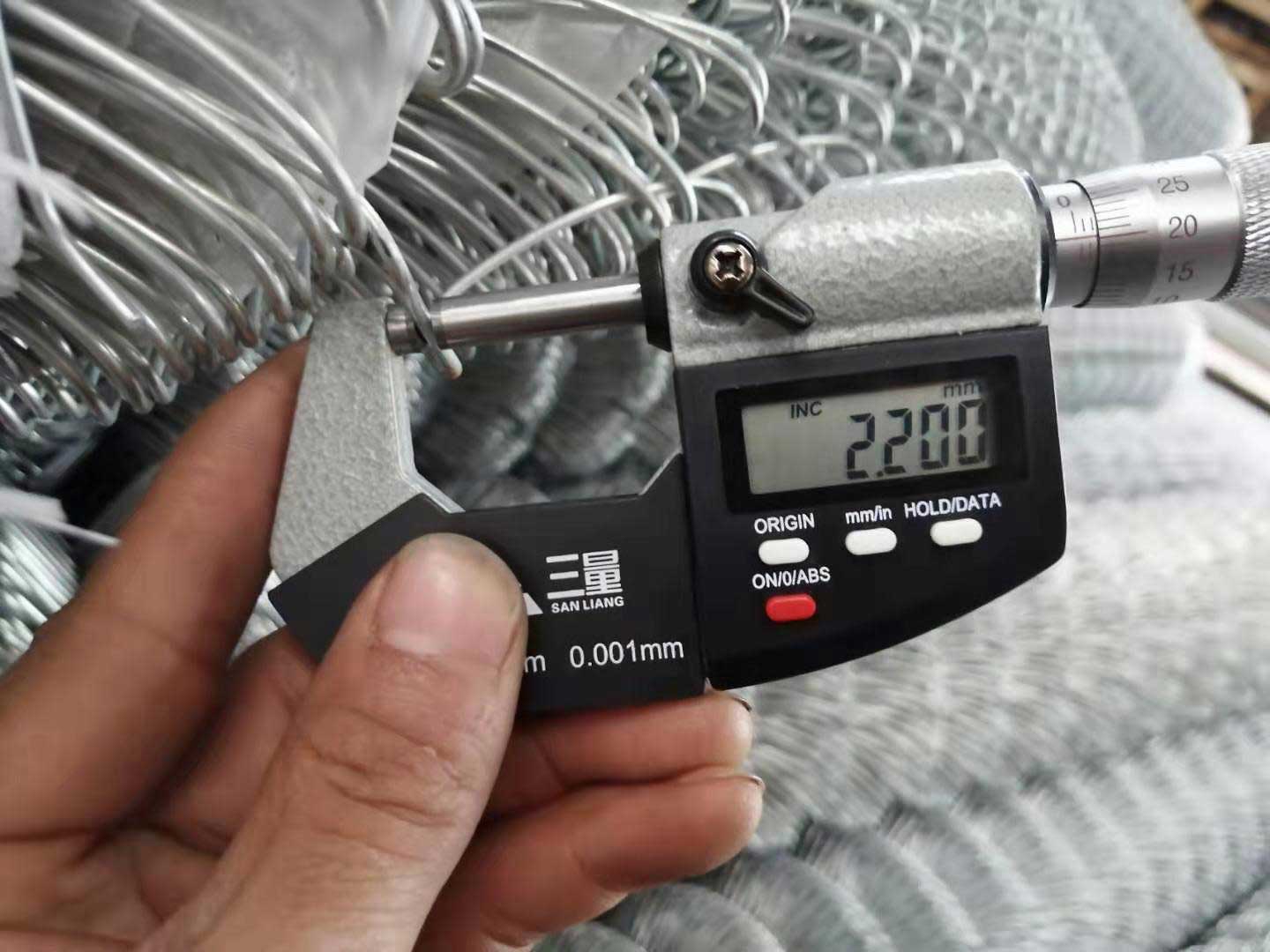
One of the advantages of buying from a manufacturer or experienced fencing supplier is that the different components can be prepared as one system.
For example:
Fence height: 2.0 m
Mesh:
50 × 50 mm opening
3.0 mm galvanized wire
Posts:
Specified steel tube
Suitable post spacing
Top rail:
Matching steel tube
Fittings:
Tension bands, brace bands, post caps, rail ends, tie wire
Gate:
Matching frame and chain link mesh
This approach reduces the risk of receiving mesh from one specification and posts or fittings that are not compatible with the intended installation.
15. Export Packaging
After inspection, the fence components are prepared for transportation.
Packaging depends on the product.
Chain Link Mesh
Mesh rolls may be packaged using:
Plastic film
Waterproof paper
Woven bags
Plastic film plus woven bags
Steel Posts
Posts may be bundled together.
Protective packaging can be added to reduce surface damage during handling and transportation.
Fittings
Small components should normally be packed separately in bags, cartons, or other suitable packages.
Gates
Gate components require packaging appropriate to their size and surface finish.
For international shipments, packaging is particularly important because products may be handled several times between the factory and the final job site.
How Is a Complete Chain Link Fence Installed?
Manufacturing is only one part of the process.
A typical installation sequence may include:
Marking the fence line
Preparing post locations
Installing line and terminal posts
Installing top rails or tension wires where required
Attaching chain link mesh
Stretching the mesh
Securing the mesh to posts
Installing gates
Checking alignment and tension
The exact installation method depends on the fence design and site conditions.
This is why a manufacturer should understand the intended application before recommending a complete system.
What Determines the Cost of Chain Link Fence?
The price of a chain link fence system depends on much more than the mesh.
Important cost factors include:
Wire diameter
Mesh opening
Mesh height
Roll length
Surface treatment
Zinc coating
PVC coating
Post dimensions
Post spacing
Top rails
Gates
Fittings
Packaging
Order quantity
Transportation
For example, a 2.0 m high fence using thicker wire and heavier posts will require more material than a lightweight garden fence.
Therefore, buyers should compare quotations based on a complete specification.
How to Specify Chain Link Fence for a Project
A good purchase specification might look like this:
Product: Chain link fence system
Mesh opening: 50 × 50 mm
Wire diameter: 3.0 mm
Fence height: 2.0 m
Roll length: 25 m
Surface: Galvanized
Edge: Knuckled and twisted
Posts:
Steel tube posts
Length and diameter according to project design
Accessories:
Top rail, tension wire, tension bands, brace bands, post caps and tie wire
Gate:
Steel frame with matching chain link mesh
Quantity:
1 × 40HQ
This gives the manufacturer enough information to prepare a more accurate quotation.
Chain Link Fence for Different Applications
The manufacturing specification should change according to the intended use.
Residential Fencing
Residential projects often focus on:
Appearance
Cost
Appropriate fence height
Corrosion protection
Ease of installation
PVC coated mesh may be selected where a colored appearance is preferred.
Agricultural Fencing
Agricultural applications may prioritize:
Cost
Flexibility
Appropriate mesh opening
Corrosion protection
Easy installation
The mesh specification should match the animals or crops being protected.
Industrial Fencing
Industrial projects may require:
Heavier wire
Suitable post dimensions
More robust fittings
Higher fence heights
Additional security measures
The complete system should be designed around the site requirements.
Sports Fencing
Sports applications may require:
Appropriate mesh opening
Suitable fence height
Flexible or rigid system design
Gate access
Durable surface treatment
Tennis courts, sports fields, and recreational facilities can require different specifications.
Galvanized vs PVC Coated Chain Link Fence
The two products share the same basic mesh manufacturing principle, but the surface treatment is different.
Feature
Galvanized Chain Link
PVC Coated Chain Link
Steel core Yes Yes
Zinc coating Yes Often used
Polymer coating No Yes
Appearance Metallic gray Colored
Common colors Silver/gray Green, black and others
Typical applications General fencing Garden, residential, decorative and selected outdoor applications
Main specification concern Wire diameter and zinc coating Core diameter, finished diameter and coating
The correct choice depends on the project environment and appearance requirements.
What Should You Ask a Chain Link Fence Manufacturer?
Before placing a bulk order, ask the manufacturer to confirm:
Mesh
Mesh opening
Wire diameter
Mesh width
Roll length
Edge type
Material
Surface treatment
Posts
Post dimensions
Wall thickness
Length
Surface treatment
Post spacing
Rails and Fittings
Top rail dimensions
Tension wire
Tension bands
Brace bands
Post caps
Tie wires
Other required accessories
Gates
Gate dimensions
Frame material
Mesh specification
Hinges
Latch
Surface treatment
Logistics
Packaging
Quantity per bundle
Roll dimensions
Container loading
Shipping terms
The more complete the specification, the easier it is to compare different suppliers.
Common Chain Link Fence Buying Mistakes
Mistake 1: Buying Mesh Without Considering the Complete System
A fence is not only mesh.
Posts, fittings, gates, and installation requirements also matter.
Mistake 2: Comparing Prices Without Comparing Wire Diameter
A cheaper quotation may use a thinner wire.
Always compare the actual diameter.
Mistake 3: Ignoring Post Specifications
A strong mesh combined with unsuitable posts may not provide the intended fence configuration.
Mistake 4: Not Clarifying PVC Wire Diameter
Always ask whether the quoted diameter refers to the steel core or finished coated wire.
Mistake 5: Forgetting Accessories
A quotation that includes only mesh may appear inexpensive but may not represent the actual project cost.
Mistake 6: Not Checking Container Loading
Chain link fencing contains a large amount of relatively lightweight material. Packaging and roll dimensions can therefore have a meaningful effect on shipping efficiency.
Frequently Asked Questions
Is chain link fence welded?
The chain link mesh itself is generally woven rather than welded. The complete fence system can contain welded or fabricated components such as steel gate frames.
What is chain link fence made from?
It is commonly made from steel wire, often galvanized or PVC coated. The complete system also includes steel posts, rails, fittings, and gates when required.
How is chain link mesh formed?
A machine mechanically bends and interlocks the wire into a continuous diamond-shaped pattern.
Is galvanized chain link fence better than PVC coated?
Neither is universally better. The appropriate choice depends on the environment, appearance requirements, coating specification, maintenance expectations, and budget.
What are the main components of chain link fence?
The main components are chain link mesh, posts, rails or tension wires, fittings, and gates when required.
Can chain link fence be customized?
Yes. Depending on the manufacturer, buyers can specify mesh opening, wire diameter, fence height, roll length, surface treatment, color, post dimensions, gates, fittings, and packaging.
How do I buy a complete chain link fence system?
Provide the fence height, mesh opening, wire diameter, surface treatment, total fence length, post requirements, gate requirements, accessories, quantity, and destination.
Final Thoughts
The manufacturing of chain link fence involves more than weaving wire into a diamond pattern.
A complete system combines chain link mesh, supporting posts, rails or tension components, fittings, gates, surface treatments, quality control, and packaging.
For buyers, understanding the manufacturing process helps reveal why two chain link fence quotations with similar-looking products can have very different prices.
When comparing suppliers, focus on the complete specification:
Mesh opening + wire diameter + fence height + surface treatment + posts + fittings + gates + packaging.
For distributors and contractors, buying these components from one experienced manufacturer can also simplify specification, production coordination, packaging, and container loading.
Qunkun Metal supplies chain link fence mesh and complete fencing components for distributors, contractors, wholesalers, agricultural customers, industrial projects, and international fencing applications. Mesh specifications, surface treatments, posts, fittings, gates, and export packaging can be prepared according to project requirements.
Previous: None
Next: 358 Security Fence vs Chain Link Fence: Security, Cost and Application Comparison
How Is Chain Link Fence Made? Manufacturing Process and Components
Pulished on Sep. 18, 2026
358 Security Fence vs Chain Link Fence: Security, Cost and Application Comparison
Pulished on Sep. 15, 2026
Why Choose Welded Wire Fence for Security and Protection?
Pulished on Sep. 07, 2026
358 Security Fence Specifications and Applications Guide
Pulished on Aug. 27, 2026
What Is Farm Fence and What Are the Main Types?
Pulished on Aug. 26, 2026
Welded Wire Fence Types, Sizes and Applications Guide
Pulished on Aug. 20, 2026
Chain Link Fence Types, Specifications and Applications Guide
Pulished on Aug. 12, 2026
How Much Does 358 Security Fence Cost? Complete Price Guide for International Buyers
Pulished on Jul. 22, 2026
How Is Chain Link Fence Made? Manufacturing Process and Components
Pulished on Sep. 18, 2026
358 Security Fence vs Chain Link Fence: Security, Cost and Application Comparison
Pulished on Sep. 15, 2026
Why Choose Welded Wire Fence for Security and Protection?
Pulished on Sep. 07, 2026
358 Security Fence Specifications and Applications Guide
Pulished on Aug. 27, 2026
What Is Farm Fence and What Are the Main Types?
Pulished on Aug. 26, 2026
Welded Wire Fence Types, Sizes and Applications Guide
Pulished on Aug. 20, 2026
Chain Link Fence Types, Specifications and Applications Guide
Pulished on Aug. 12, 2026
How Much Does 358 Security Fence Cost? Complete Price Guide for International Buyers
Pulished on Jul. 22, 2026