EN
 SP
 FR

- Home
- About Us
- Products
- Service
- Project
- News
- Contact Us
Pulished on Nov. 18, 2026
When purchasing welded wire fence, buyers often focus on mesh opening, panel height and price. However, one specification deserves equal attention: wire diameter.
Wire diameter directly affects the amount of steel used in production and influences the fence's weight, rigidity, resistance to deformation and overall cost. Choosing an unsuitable diameter can create problems even when the mesh opening and fence dimensions meet the project requirements.
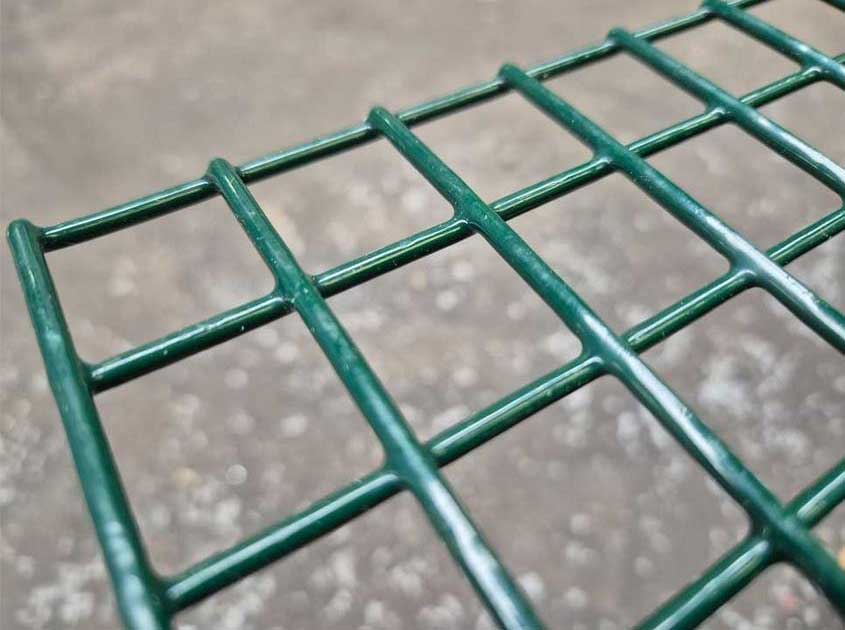
For example, two welded wire fences may have the same 50 × 100 mm mesh opening and the same height, but one uses 2.0 mm wire while the other uses 4.0 mm wire. Their physical characteristics and intended applications can be quite different.
So, how thick should the wire be for a welded wire fence?
The answer depends on the fence's purpose, height, mesh opening, support structure, environmental conditions and expected service requirements.
This guide explains how to select the appropriate wire diameter and what buyers should check before ordering welded wire fencing from a manufacturer.
1. What Is Wire Diameter in Welded Wire Fence?
Wire diameter refers to the thickness of the individual steel wires used to manufacture welded wire mesh.
In a welded wire fence, longitudinal and transverse wires are arranged in a grid pattern and joined at their intersections through welding.
The wire diameter is normally specified in millimeters (mm) or inches.
Common metric diameter options include:
2.0 mm
2.5 mm
3.0 mm
3.5 mm
4.0 mm
4.5 mm
5.0 mm
6.0 mm
These are examples of commonly encountered specifications, not a universal product standard. Actual availability depends on the manufacturer, mesh construction and application.
A larger wire diameter generally means more steel material in the fence, which can increase its weight and resistance to bending. However, the finished fence's performance also depends on wire material, welding quality, mesh geometry and supporting structure.
Wire Diameter vs. Wire Gauge: What Is the Difference?
Some buyers specify welded wire fence using wire gauge rather than millimeters.
Wire gauge is a numbering system used to describe wire thickness. However, different gauge systems do not always use the same conversion values.
For example, American Wire Gauge (AWG) and other wire gauge systems should not be treated as interchangeable.
To avoid misunderstandings, buyers should specify the actual wire diameter in millimeters whenever possible. If a gauge number is used, the applicable gauge system should also be identified.
2. How Wire Diameter Affects Welded Wire Fence Performance
Wire diameter is not just a purchasing measurement. It influences several practical characteristics of the finished fence.
Fence Rigidity
Thicker wire generally provides greater resistance to bending than thinner wire of the same material and comparable construction.
This is important for fencing that must maintain its shape during installation, handling and normal service.
For example, a lightweight garden enclosure may not require the same wire diameter as an industrial perimeter fence.
However, overall rigidity also depends on mesh spacing, panel dimensions, horizontal and vertical wire arrangements, reinforcing folds and frame construction.
Resistance to Physical Deformation
Fences may experience pressure from animals, accidental impacts, handling equipment, wind or other external forces.
A suitable wire diameter can help the mesh maintain its shape under the expected conditions.
Nevertheless, thicker wire alone does not guarantee that a fence will withstand every impact or load. Weld integrity, panel support, post spacing and installation details are equally important.
Product Weight
Wire diameter has a direct effect on steel consumption.
For otherwise comparable mesh designs, increasing wire diameter increases the weight of the finished product.
This affects:
Material costs
Roll or panel weight
Packaging requirements
Loading capacity
International transportation costs
For importers purchasing large quantities, wire diameter can therefore have a significant influence on the total landed cost.
Welded Joint Requirements
Welded intersections connect the longitudinal and transverse wires.
The welding process must be suitable for the wire dimensions and material properties. Inconsistent welding can result in weak joints, regardless of whether the wire itself is thick or thin.
For demanding applications, buyers should evaluate both the wire diameter and the integrity of the welded intersections.
3. Which Wire Diameter Is Suitable for Different Applications?
There is no single wire diameter suitable for every welded wire fence project.
The following examples provide practical starting points for discussing specifications with a manufacturer.
Application
Indicative Wire Diameter
Main Consideration
Lightweight garden fencing 2.0–2.5 mm Low weight and basic enclosure
Residential boundary fencing 2.5–3.5 mm Balance of rigidity and cost
General commercial fencing 3.0–4.0 mm Regular use and dimensional stability
Industrial perimeter fencing 3.5–5.0 mm Greater rigidity and support requirements
Animal enclosure fencing 2.5–4.0 mm Animal size, behavior and containment
Heavy-duty security fencing 4.0–6.0 mm or engineered design Application-specific security and structural requirements
These ranges are indicative purchasing references, not engineering specifications or guaranteed performance ratings. The appropriate diameter should be confirmed against the actual mesh design, panel dimensions, loads, applicable standards and installation conditions.
Garden and Residential Fencing
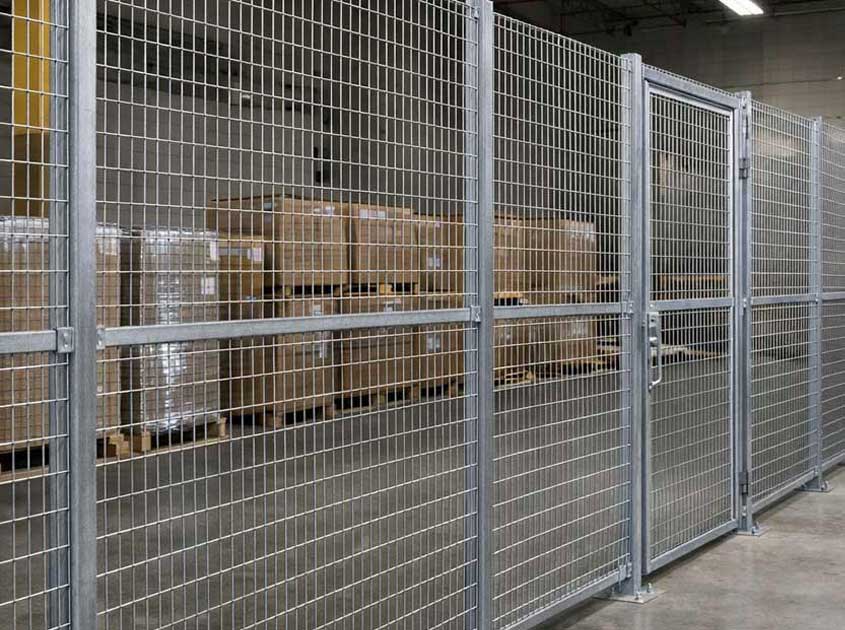
Garden and residential fences are commonly used to define property boundaries, protect plants and separate outdoor areas.
For these applications, relatively lightweight welded wire mesh may be sufficient.
Buyers often prioritize:
Attractive appearance
Easy handling and installation
Suitable mesh openings
Galvanized or PVC-coated finishes
Reasonable material costs
A thicker wire is not always necessary for a simple garden boundary.
However, if the fence is intended to contain active dogs or other animals, wire diameter, mesh opening and support structure should be selected according to the animals' size and behavior.
Commercial and Industrial Fencing
Commercial and industrial facilities often require more rigid fencing to protect equipment, separate working areas and define restricted-access zones.
In these situations, wire diameter should be considered together with panel height, mesh opening, post spacing and fixing methods.
A thicker wire may improve the panel's resistance to deformation, but the complete fence assembly must be designed to suit the site conditions.
Agricultural and Animal Fencing
Agricultural fencing must be selected according to the animals being contained and the conditions of the farm.
For example, a fence intended for small animals may require smaller openings, while cattle enclosures may need a different combination of wire diameter, height and supporting posts.
Buyers should consider:
Animal size and behavior
Likelihood of pushing or leaning against the fence
Mesh opening and edge condition
Ground clearance
Corrosion exposure
Gate and corner reinforcement
For livestock applications, the strongest-looking mesh is not automatically the safest option. The design should avoid openings and edges that could create entrapment or injury risks.
4. How Mesh Opening and Fence Height Influence Wire Diameter Selection
Wire diameter should never be selected independently of mesh opening and fence height.
These three specifications work together.
Mesh Opening
Mesh opening determines the distance between adjacent wires.
For the same wire diameter, a smaller opening generally means more wires are used across a given area, increasing material consumption and product weight.
A larger opening may reduce material consumption, but it may not provide suitable containment for smaller animals or objects.
For example:
Small openings may suit certain animal enclosures and protective barriers.
Medium openings are common in general-purpose fencing.
Larger openings may be appropriate for some boundary and agricultural applications.
The mesh opening must match the intended purpose before the wire diameter is finalized.
Fence Height
A taller fence has more mesh area per linear meter and may require additional structural support.
Wind exposure and the fence's ability to resist external loads become particularly important as height increases.
For this reason, buyers should not assume that a wire diameter suitable for a 1.2 m garden fence will automatically be suitable for a 2.4 m industrial fence.
The posts, foundations, panel dimensions and fixing system should be reviewed together.
Panel Dimensions and Construction
Welded wire fence may be supplied as rolls or rigid panels.
The same wire diameter can behave differently depending on the product format.
For example, rigid panels may incorporate horizontal reinforcing folds or frames that improve overall stiffness. A roll of flexible welded mesh relies more heavily on its supporting posts and installation tension.
Therefore, the product's construction should be clarified before comparing wire diameters.
5. How Material and Surface Coating Affect Wire Diameter Specifications
Another important purchasing detail is whether the stated wire diameter refers to the bare steel wire or the finished coated wire.
This distinction is particularly important for galvanized and PVC-coated welded wire fencing.
Galvanized Welded Wire Fence
Galvanized welded wire fence uses a zinc coating to help protect the steel substrate from corrosion.
Depending on the production route, the mesh may be galvanized before or after welding.
When specifying galvanized welded wire fence, buyers should confirm:
Whether the wire is galvanized before or after welding
Whether the diameter refers to the bare wire or coated wire
Required zinc coating mass or thickness
Surface condition and coating continuity
Applicable corrosion protection requirements
A thicker zinc coating does not mean the underlying steel wire has a larger structural diameter.
For accurate comparisons, the bare steel diameter and coating specification should be identified separately where required.
PVC-Coated Welded Wire Fence
PVC-coated welded wire fence is commonly used for garden fencing, residential boundaries and outdoor enclosures.
The polymer coating adds an outer layer around the wire, so the finished diameter may be larger than the underlying steel wire diameter.
For example, a product specified with a particular finished diameter may contain a smaller steel core beneath the PVC layer.
Buyers should therefore confirm both:
Steel core wire diameter
Finished outside diameter after coating
This is especially important when comparing supplier quotations or checking compatibility with clips, fittings and other accessories.
6. How to Compare Two Welded Wire Fence Quotations Fairly
Two suppliers may quote the same fence height and mesh opening but offer very different prices.
Before deciding which quotation is better, compare the complete specifications.
Specification
Supplier A
Supplier B
Fence height 1.8 m 1.8 m
Mesh opening 50 × 100 mm 50 × 100 mm
Steel wire diameter 3.0 mm 4.0 mm
Surface finish Galvanized Galvanized
Panel construction Standard welded panel Reinforced welded panel
Post and fixing system Confirm separately Confirm separately
This is an illustrative comparison, not a supplier performance test.
Although the two products share the same height and mesh opening, their steel consumption and construction are different.
The buyer should also compare welding quality, coating requirements, dimensional tolerances, panel weight and packaging.
A lower quotation may simply reflect a smaller wire diameter or a different construction method rather than better manufacturing efficiency.
The objective should be to compare equivalent products, not just equivalent product names.
7. Common Mistakes When Selecting Welded Wire Fence Wire Diameter
Choosing the Thickest Wire Available
Thicker wire may provide greater resistance to bending, but it also increases material consumption, product weight and cost.
For light-duty fencing, an unnecessarily thick wire may offer little practical benefit.
Selecting Wire Diameter Without Considering Mesh Opening
A fence with a small mesh opening and a thin wire may perform differently from one with a larger opening and the same wire diameter.
The complete mesh design must be considered.
Confusing Coated Diameter with Steel Core Diameter
This is a frequent source of specification misunderstandings.
A PVC-coated wire may have a larger finished outside diameter than its underlying steel core.
Always clarify which measurement is being quoted.
Ignoring Weld Quality
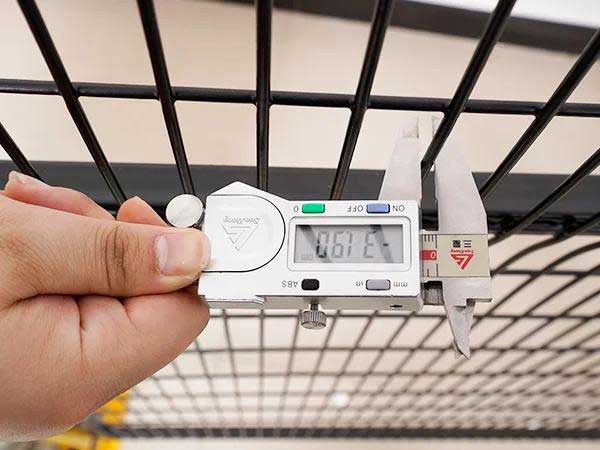
Thicker wires cannot compensate for inconsistent or weak welded intersections.
Joint integrity should be checked as part of the product quality evaluation.
Ignoring Posts and Installation
The fence fabric is only one part of the complete system.
Post spacing, foundations, bracing, fixing methods and site conditions all influence the final performance.
8. A Practical Checklist Before Ordering Welded Wire Fence
Before requesting a quotation, prepare the following information:
Fence application and intended use
Required fence height
Mesh opening dimensions
Steel core wire diameter
Material type
Surface finish: black, galvanized or PVC coated
Coating requirements, where applicable
Roll or panel dimensions
Reinforcing folds or frame requirements
Post spacing and accessory requirements
Required technical standards and inspection criteria
Order quantity and destination port
Providing these details allows manufacturers to evaluate the actual product requirements and prepare more accurate quotations.
For customized projects, a technical drawing or reference sample can help avoid misunderstandings.
9. Frequently Asked Questions
What is a good wire diameter for welded wire fence?
The appropriate diameter depends on the application. Lightweight garden fencing may use relatively thin wire, while commercial and industrial fencing may require thicker wire and a more rigid panel construction. There is no universal best diameter.
Is 4 mm welded wire fence stronger than 3 mm?
For otherwise comparable wire material and construction, 4 mm wire generally has greater resistance to bending than 3 mm wire. However, actual fence performance also depends on mesh spacing, weld integrity, panel design and supporting structure.
Does thicker wire make welded wire fence more expensive?
Generally, yes. Thicker wire uses more steel material and increases product weight. This can affect manufacturing costs, packaging and international freight expenses.
What is the difference between wire diameter and finished diameter?
Wire diameter may refer to the bare steel core. Finished diameter includes the outer coating, such as PVC. Buyers should clarify the measurement basis when specifying coated welded wire fence.
How do I choose wire diameter for a dog fence?
Consider the dog's size, behavior, jumping and pushing habits, as well as the fence height and mesh opening. The design should prevent the animal from passing through or becoming trapped. For larger or highly active dogs, the supporting structure and gate security also require attention.
Does thicker wire always mean better fence quality?
No. Wire diameter is only one quality factor. Raw material, weld integrity, mesh accuracy, surface protection, panel construction and manufacturing consistency are also important.
Conclusion: Select Wire Diameter According to the Complete Fence Design
Choosing the right wire diameter for welded wire fence requires balancing rigidity, material consumption, containment, corrosion protection and project cost.
A lightweight garden fence does not necessarily need heavy-duty wire, while an industrial perimeter fence may require a more substantial mesh construction and stronger supporting system.
The most reliable approach is to evaluate wire diameter together with mesh opening, fence height, material, coating and installation requirements.
Linkland fence is a wire mesh manufacturer and exporter based in Anping, China, with more than 30 years of industry experience. We supply welded wire fence and welded wire mesh in different wire diameters, mesh openings, panel dimensions and surface finishes for international distributors, contractors and project buyers.
Contact our team with your required fence specifications, application and order quantity. We can discuss a suitable welded wire fence solution for your project.
Previous: None
Next: What Mesh Size Is Best for Welded Wire Fence? A Practical Selection Guide
How to Select the Right Wire Diameter for Welded Wire Fence? A Practical Buyer’s Guide
Pulished on Nov. 18, 2026
What Mesh Size Is Best for Welded Wire Fence? A Practical Selection Guide
Pulished on Nov. 09, 2026
How Much Does Chain Link Fence Cost? A Complete Guide to Material Prices, Shipping and Project Costs
Pulished on Oct. 27, 2026
How to Install a Welded Wire Fence: A Step-by-Step Guide for Contractors
Pulished on Oct. 23, 2026
358 Fence vs Welded Wire Fence: Which Is Better for Your Project?
Pulished on Oct. 20, 2026
What Are the Advantages of Chain Link Fence? 8 Benefits for Commercial and Industrial Projects
Pulished on Oct. 16, 2026
How to Choose Farm Fence for Cattle and Horses: Wire, Height and Design Guide
Pulished on Sep. 23, 2026
How Is Chain Link Fence Made? Manufacturing Process and Components
Pulished on Sep. 18, 2026
How to Select the Right Wire Diameter for Welded Wire Fence? A Practical Buyer’s Guide
Pulished on Nov. 18, 2026
What Mesh Size Is Best for Welded Wire Fence? A Practical Selection Guide
Pulished on Nov. 09, 2026
How Much Does Chain Link Fence Cost? A Complete Guide to Material Prices, Shipping and Project Costs
Pulished on Oct. 27, 2026
How to Install a Welded Wire Fence: A Step-by-Step Guide for Contractors
Pulished on Oct. 23, 2026
358 Fence vs Welded Wire Fence: Which Is Better for Your Project?
Pulished on Oct. 20, 2026
What Are the Advantages of Chain Link Fence? 8 Benefits for Commercial and Industrial Projects
Pulished on Oct. 16, 2026
How to Choose Farm Fence for Cattle and Horses: Wire, Height and Design Guide
Pulished on Sep. 23, 2026
How Is Chain Link Fence Made? Manufacturing Process and Components
Pulished on Sep. 18, 2026