EN
EN SP
SP FR
FR
- Home
- About Us
- Products
- Service
- Project
- News
- Contact Us
Pulished on Jan. 26, 2026
Chain link fencing is one of the most widely used solutions for security, boundary protection, and industrial projects in the Middle East. With countries like Saudi Arabia, UAE, Qatar, Oman, and Kuwait experiencing rapid urban growth, infrastructure expansion, and industrial development, selecting the right chain link fence is critical for ensuring long-term performance, durability, and cost-effectiveness.
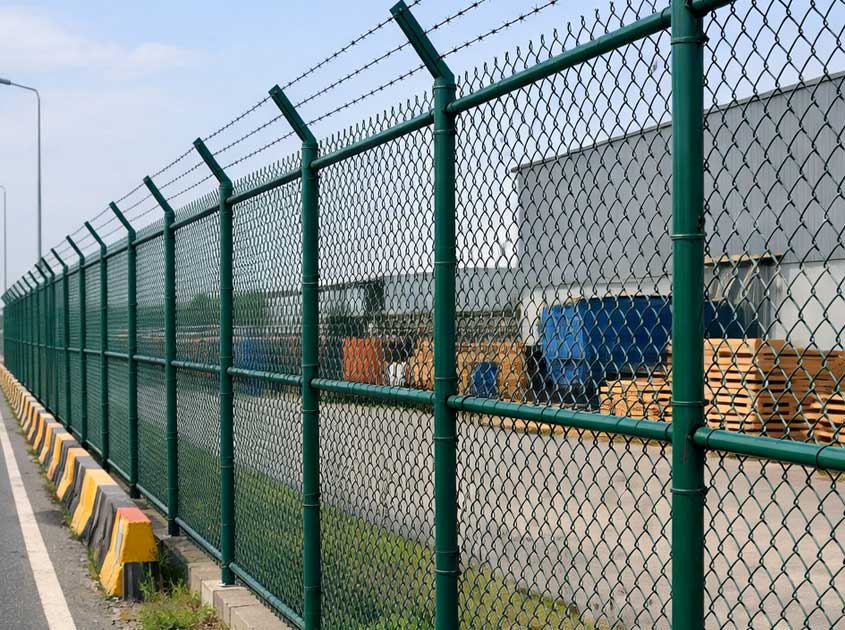
This guide provides a detailed overview of how to choose chain link fences for Middle East applications, covering materials, coatings, wire gauge, mesh size, and installation considerations.
1. Why Chain Link Fence Is Popular in the Middle East
Chain link fencing is favored in the region due to several advantages:
Durability: Strong steel wire construction resists stretching and deformation.
Corrosion Resistance: Galvanized and PVC-coated options prevent rust in harsh climates.
Cost-Effectiveness: Offers reliable protection at a lower cost compared to solid panel fencing.
Ease of Installation: Flexible rolls and prefabricated panels make installation fast and practical.
These features make chain link fencing suitable for residential compounds, industrial sites, construction zones, airports, and public facilities.
2. Material Selection: Galvanized vs PVC Coated
Galvanized Chain Link Fence
Coated with zinc to prevent corrosion
Affordable and widely used for general security applications
Suitable for dry inland areas
PVC-Coated Chain Link Fence
Zinc layer plus a durable PVC coating
Superior corrosion resistance in coastal or high-humidity environments
Available in green, black, or custom colors for aesthetic appeal
Recommendation: For Middle Eastern countries with coastal exposure like UAE and Oman, PVC-coated chain link fencing ensures longer service life and minimal maintenance.
3. Wire Gauge and Mesh Size
Selecting the correct wire diameter and mesh size is crucial for security and durability:
Wire Diameter: Typically ranges from 2.0 mm to 5.0 mm.
2.0–2.5 mm: Suitable for residential or light-duty fencing
3.0–4.0 mm: Industrial and commercial use
4.5–5.0 mm: High-security installations
Mesh Size (Opening): Standard sizes include 50 mm, 75 mm, and 100 mm.
Smaller openings enhance anti-climb security
Larger openings reduce material cost for general-purpose fencing
4. Height and Security Requirements
The height of chain link fencing depends on the application and security level:
Residential and park fencing: 1.8–2.5 meters
Industrial and commercial facilities: 2.5–3.0 meters
High-security zones (airports, government, industrial plants): 3.0–4.0 meters with anti-climb features
For enhanced security, consider adding barbed wire, razor wire, or anti-climb panels on top.
5. Environmental Considerations
Middle Eastern climates pose specific challenges:
High Temperatures: Steel wires must resist expansion and contraction.
Sandstorms: Corrosion-resistant coatings prevent abrasive damage.
Coastal Salt Air: PVC coating or hot-dip galvanization is essential.
Proper material selection ensures the fence maintains strength, stability, and appearance over years of exposure.
6. Installation and Maintenance Tips
Installation
Use prefabricated rolls or panels for efficiency
Secure posts firmly in concrete foundations
Maintain proper tension during installation to prevent sagging
Maintenance
Regular inspection for damage or rust
Touch up PVC coatings if scratched
Clean sand or debris buildup near the base
Proper installation and routine maintenance significantly extend the fence’s service life.
7. Why Import Chain Link Fences from China
China is a leading supplier of high-quality chain link fencing for the Middle East due to:
Wide product variety: Galvanized, PVC-coated, industrial, and decorative options
Custom specifications: Wire gauge, mesh size, height, and color
Cost-effective solutions: Competitive pricing for bulk orders
Export expertise: Packaging optimized for long-distance shipping and Middle Eastern logistics
By sourcing from experienced Chinese manufacturers, Middle Eastern distributors ensure consistent quality, timely delivery, and compliance with project specifications.
8. Packaging and Logistics
Proper packaging is critical for Middle Eastern shipments:
Wire mesh rolls tightly wrapped with protective film
PVC-coated fencing packed to avoid scratches
Panelized fencing stacked and secured with corners and pallets
Reliable packaging prevents transport damage and ensures smooth on-site installation.
9. Applications of Chain Link Fence in the Middle East
Residential compounds: Protect homes and community spaces
Industrial facilities: Secure warehouses, factories, and storage yards
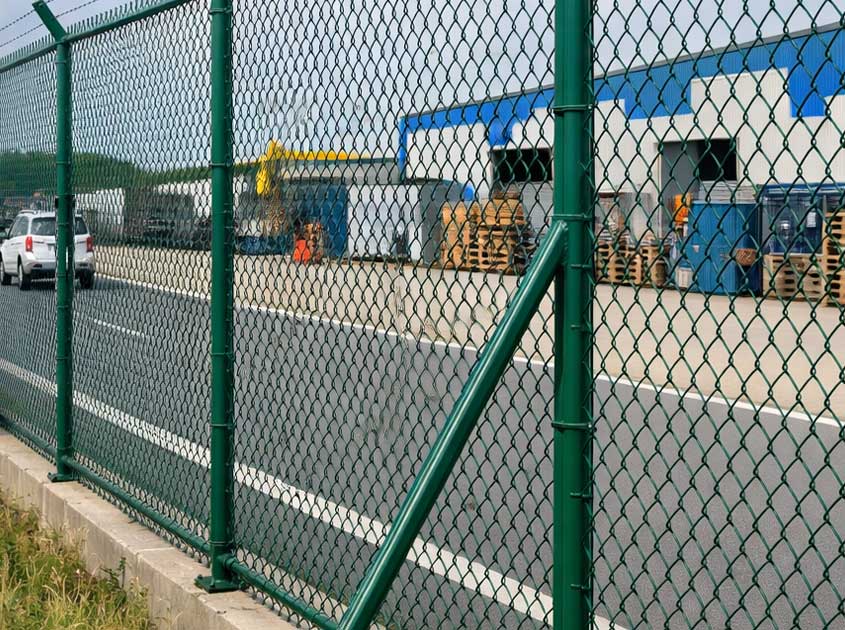
Construction sites: Temporary or permanent perimeter protection
Public infrastructure: Airports, sports complexes, and government facilities
Agriculture and livestock: Enclose farms and ranches
Chain link fencing is versatile and adaptable to various security levels.
10. Conclusion
Selecting the best chain link fence for Middle East applications involves evaluating material, wire gauge, mesh size, height, coating, and installation requirements.
Galvanized fences: Cost-effective for inland, dry areas
PVC-coated fences: Long-lasting, ideal for coastal or high-humidity environments
Reinforced panels and anti-climb designs: Suitable for high-security applications
By sourcing from professional Chinese manufacturers, buyers gain high-quality fencing, customizable solutions, and reliable logistics, ensuring that chain link fences deliver optimal security, durability, and value for projects across the Middle East.
Why Choose Welded Wire Fence for Security and Protection?
Pulished on Sep. 07, 2026
358 Security Fence Specifications and Applications Guide
Pulished on Aug. 27, 2026
What Is Farm Fence and What Are the Main Types?
Pulished on Aug. 26, 2026
Welded Wire Fence Types, Sizes and Applications Guide
Pulished on Aug. 20, 2026
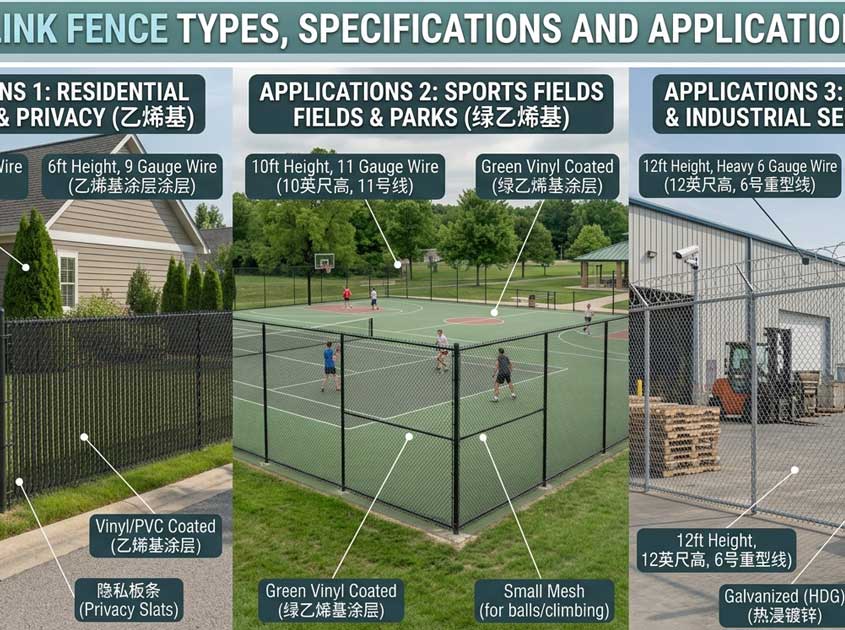
Chain Link Fence Types, Specifications and Applications Guide
Pulished on Aug. 12, 2026
How Much Does 358 Security Fence Cost? Complete Price Guide for International Buyers
Pulished on Jul. 22, 2026
358 Security Fence vs Chain Link Fence: Which One Is Better for High Security Projects?
Pulished on Jul. 22, 2026

Anti-Climb 358 Mesh Fence Supplier for Prisons and Airports
Pulished on Jul. 22, 2026
Why Choose Welded Wire Fence for Security and Protection?
Pulished on Sep. 07, 2026
358 Security Fence Specifications and Applications Guide
Pulished on Aug. 27, 2026
What Is Farm Fence and What Are the Main Types?
Pulished on Aug. 26, 2026
Welded Wire Fence Types, Sizes and Applications Guide
Pulished on Aug. 20, 2026
Chain Link Fence Types, Specifications and Applications Guide
Pulished on Aug. 12, 2026
How Much Does 358 Security Fence Cost? Complete Price Guide for International Buyers
Pulished on Jul. 22, 2026
358 Security Fence vs Chain Link Fence: Which One Is Better for High Security Projects?
Pulished on Jul. 22, 2026
Anti-Climb 358 Mesh Fence Supplier for Prisons and Airports
Pulished on Jul. 22, 2026